Oskar Mortensen
Oskar Mortensen is a Content Specialist at Repax who loves turning complicated sustainability rules into something everyone can actually understand. Think of him as your friendly guide through the world of EPR regulations and circularity—breaking down the confusing stuff so you can focus on what really matters for your business. His goal? Making environmental compliance feel less like homework and more like a conversation. When Oskar's not writing helpful content, you'll find him out on the golf course, breathing in that fresh air and enjoying nature's own waste-free system.

Articles by :author:
The latest industry news, interviews, technologies, and resources.
What is ink removal in design for recycling?
Glossary
Ink removal, or deinking, makes recycling paper easier by lifting ink off fibers. Using eco-friendly inks and simple materials helps keep paper clean, boosting recycling and supporting a circular economy.
What is the Mobius loop (recycling symbol)?
Glossary
The Möbius Loop, a triangle of arrows, shows recycling’s cycle: collect, process, reuse. It reminds us to recycle and choose products made from recycled materials, supporting a circular economy.
What is durability?
Glossary
Durability means making products that last long, reducing waste and resource use. It supports sustainability by lowering pollution and fitting into a circular economy. How long do your things last?

What is packaging optimisation?
Glossary
Packaging optimisation means using less, eco-friendly materials to protect products, reduce waste, and boost recycling. It saves resources, cuts emissions, and supports a circular economy.

What are design guidelines for packaging?
Glossary
Packaging should use less material, be strong, easy to recycle or reuse, clearly labeled, and eco-friendly in materials and inks to cut waste and pollution while protecting products well.
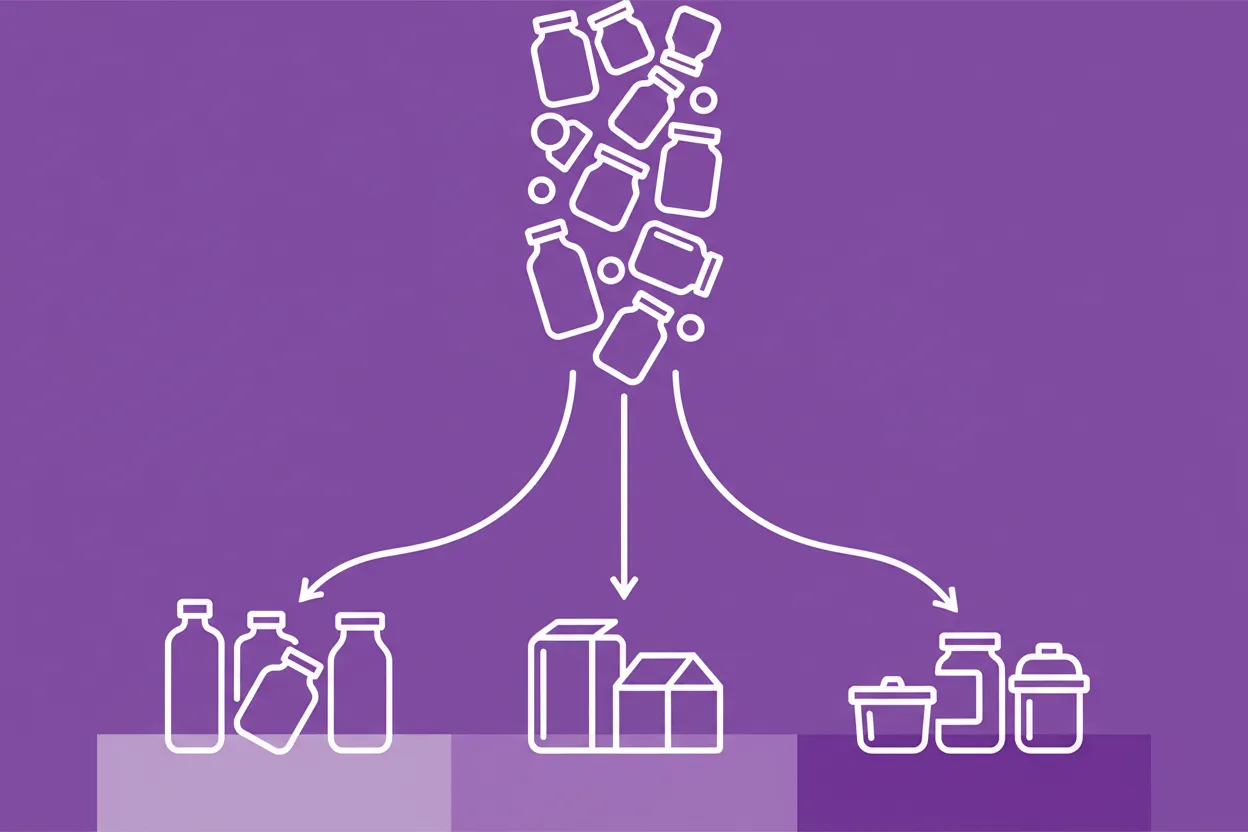
What is colour sorting compatibility?
Glossary
Colour Sorting Compatibility means designing materials with clear, distinct colors so recycling machines can easily separate them, improving recycled product quality and supporting waste reduction.

What is dematerialization?
Glossary
Dematerialisation means using fewer materials for the same purpose, cutting waste and saving resources. It supports sustainability by reducing pollution and promoting circular economy practices.
What is design for environment (DfE)?
Glossary
Design for Environment means making products that use fewer resources, last longer, use less energy, and are easier to recycle—helping reduce waste and protect the planet.
What is right-sizing in packaging?
Glossary
Right-sizing packaging means using just enough material to fit the product, cutting waste, saving costs, lowering emissions, and making recycling easier—a smart step toward sustainability.
What is packaging recovery?
Glossary
Packaging recovery means collecting and recycling used packaging like bottles and boxes to save resources, reduce waste, and protect the environment through reuse, recycling, and energy recovery.
What is packaging waste prevention?
Glossary
Prevent packaging waste by choosing products with less or reusable packaging, bringing your own bags, buying in bulk, and supporting brands with eco-friendly designs. Small steps make a big impact!
What is single polymer packaging?
Glossary
Single Polymer Packaging uses one plastic type, making recycling easier and cutting waste. It keeps products fresh, saves energy, and supports a circular economy—good for you and the planet!