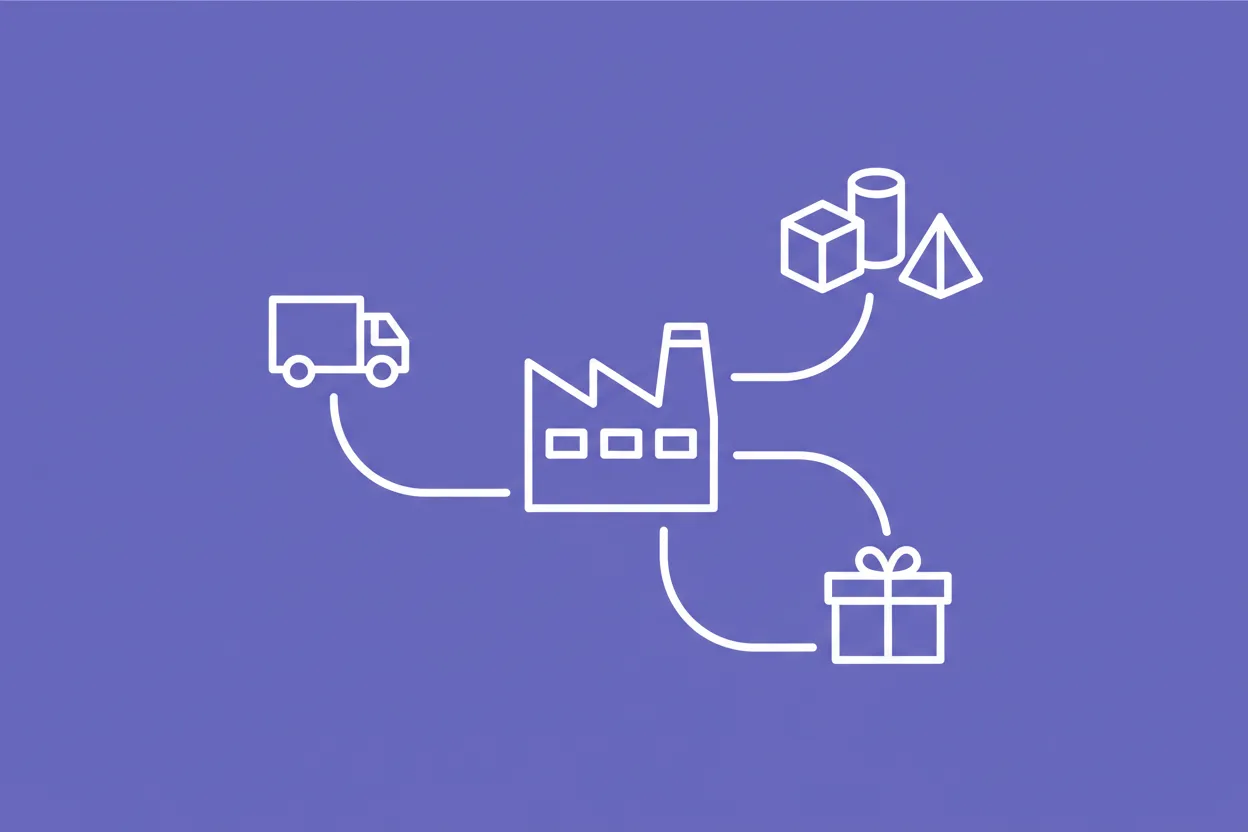
Lots of the greenhouse gases linked to a company come from places it doesn’t directly control. Scope 3 emissions include these indirect emissions from activities all along the value chain, like making raw materials, shipping products, or even how customers use and throw away items.
Most companies find that these indirect emissions make up the biggest chunk of their total impact. That’s why measuring and reducing Scope 3 emissions is essential for real progress toward sustainability and a circular economy.
Definition: scope 3 emissions
Scope 3 emissions are greenhouse gases from a company’s value chain activities that it doesn’t directly control. These include emissions from producing raw materials, transporting goods, using products, and disposing of waste, covering the full lifecycle beyond the company’s own operations.
Scope 3 emissions cover the full lifecycle of a product beyond company control. They are greenhouse gases from value chain activities before and after a company’s operations.
Think about a shoe company: it doesn’t just count emissions from making shoes or running the factory. It also includes the pollution from growing cotton, shipping materials, packaging, and even when customers wear or toss the shoes. This helps the company see the full environmental impact.
How Scope 3 emissions became a key part of corporate carbon footprints
Have you ever wondered why companies focus on emissions beyond their own factories? Scope 3 emissions include indirect greenhouse gases from activities like product use and waste. These emissions often make up the largest part of a company’s total carbon footprint.
Back in the early 2000s, a new system called the GHG Protocol helped businesses categorize emissions into three groups. While Scope 1 and 2 emissions were easier to track, Scope 3 covered a wide range of indirect sources, making it tricky to measure. Over time, companies realized Scope 3 emissions could represent over 70% of their total impact, pushing them to develop better tools and standards to track these emissions.
Today, regulations like the EU’s Corporate Sustainability Reporting Directive require many companies to report on their Scope 3 emissions. This transparency encourages businesses to take responsibility for their entire value chain and find ways to reduce emissions beyond their own operations.
The rise of Scope 3 emissions reporting shows how companies are expanding their sustainability efforts. Tackling these emissions is essential for a truly circular and sustainable future.
But what is the difference between scope 3, scope 2 and scope 1? Read the articles to find out!
6 examples on emissions from indirect activities
Here are some common sources where companies often see emissions tied to their broader value chain:
- Purchased goods and services: Emissions come from producing the raw materials and products a company buys. This includes everything from packaging to components made by suppliers.
- Business travel: Flights, car rentals, and hotel stays generate emissions as employees travel for work. These often add up significantly over time.
- Employee commuting: The daily travel of workers between home and office contributes emissions based on the mode of transport.
- Waste generated in operations: Disposal and treatment of waste from company activities create emissions, especially if sent to landfill or incineration.
- Use of sold products: When customers use a product, emissions can occur depending on energy or fuel consumed during its lifetime.
- Transportation and distribution: Moving goods between suppliers, factories, and customers involves trucks, ships, or planes that emit greenhouse gases.
While a company controls direct emissions from its own sites, these examples show how much impact lies beyond its immediate operations. Addressing these indirect sources is key to making real progress on sustainability goals.
Terms related to indirect emissions from business activities
Many businesses find that a large part of their environmental impact comes from activities beyond their direct control, such as suppliers and product use.
| Term | Description |
|---|---|
| Supply chain emissions | Emissions generated throughout the process of producing and delivering goods and services. |
| Carbon footprint | The total greenhouse gases emitted by an individual, organization, product, or activity. |
| Life cycle assessment | A method to evaluate environmental impacts across all stages of a product’s life. |
| Product carbon footprint | The greenhouse gases emitted during the entire life of a product, from creation to disposal. |
| Value chain emissions | Emissions from all activities involved in creating and delivering a product or service. |
| Upstream and downstream emissions | Emissions occurring before (upstream) and after (downstream) a company’s direct operations. |
Frequently asked questions on Scope 3 emissions
Scope 3 emissions cover indirect greenhouse gases from a company’s value chain, beyond direct control.
What are supply chain emissions?
These are emissions from all activities involved in producing and delivering goods, like raw material extraction, manufacturing, and transport. They form a big part of Scope 3 emissions.
How is the product carbon footprint measured?
It calculates all greenhouse gases emitted during a product’s life—from raw materials to disposal—helping companies reduce environmental impact.
What’s the difference between upstream and downstream emissions?
Upstream emissions happen before a company’s operations, like supplier activities; downstream occur after, like product use and disposal.
How does life cycle assessment relate to Scope 3?
Life cycle assessment evaluates environmental impacts across a product’s full life, helping identify major Scope 3 emission sources to target reductions.
Why is greenhouse gas accounting important?
It measures emissions accurately to track progress and report transparently, ensuring companies meet sustainability goals and legal requirements.
What role does corporate sustainability reporting play?
It publicly shares emissions data, including Scope 3, showing accountability and encouraging better environmental practices.
How does circular economy impact Scope 3 emissions?
By designing products for reuse, repair, and recycling, circular economy approaches reduce emissions across the entire value chain and support sustainability.
