Sometimes it’s hard to know if the products we buy really come from responsible and sustainable sources. Without clear proof, harmful practices like illegal logging or waste dumping can happen unnoticed.
Producers and sellers need a reliable way to show every step a product takes, from where it starts to where it ends up. Without this, trust is lost, and it’s difficult to support products that protect the environment.
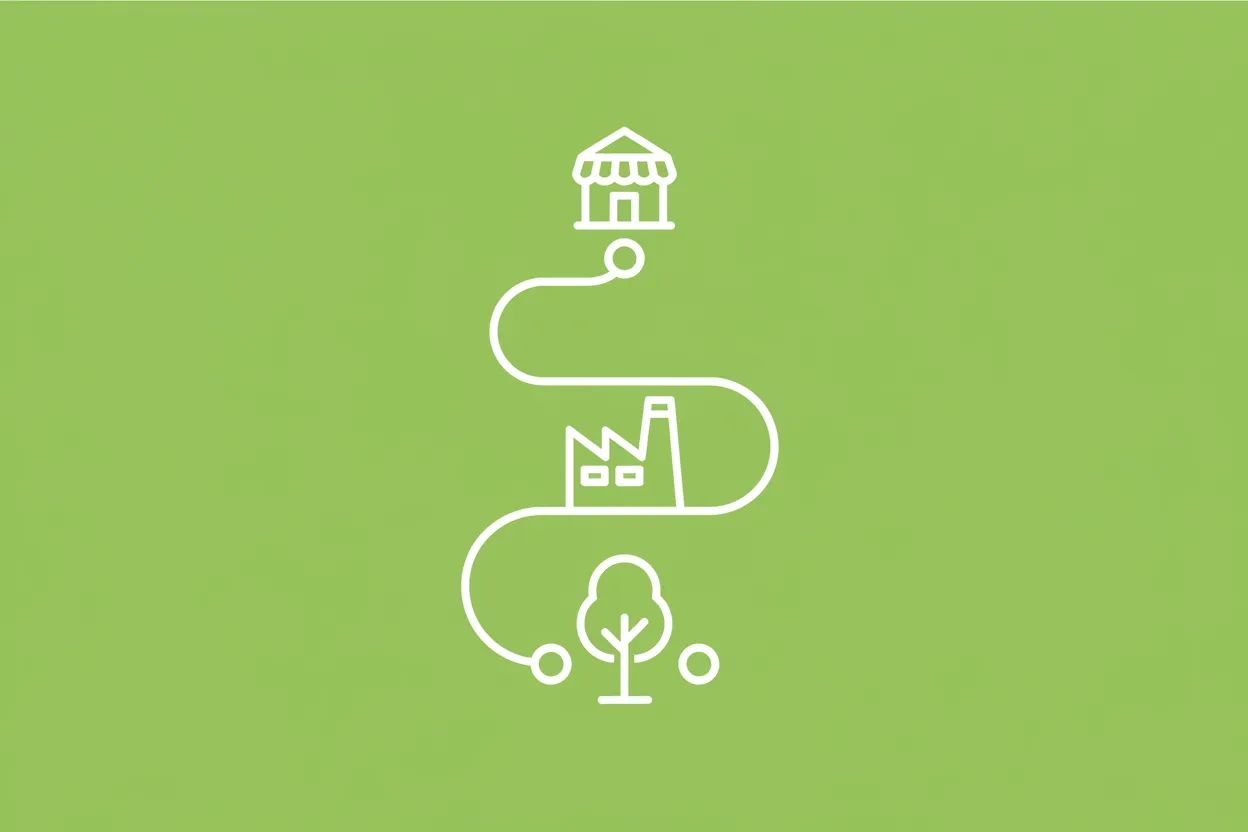
Chain of Custody solves this problem by tracking materials through each stage—harvesting, processing, and selling—ensuring products are genuine, legal, and support sustainability. It helps businesses, consumers, and regulators be confident in what they buy and sell.
Definition: chain of custody
Chain of Custody (CoC) is a system that tracks a product’s path from where it starts to where it ends up. It ensures the product comes from responsible, sustainable sources by recording every step—like harvesting, processing, and selling—to prove it hasn’t been mixed with illegal or harmful materials.
Chain of Custody records every step a product takes to ensure sustainability. It tracks the product’s journey from origin to final destination.
Think of buying wood with a CoC label like following a detailed receipt showing the wood was legally cut from a well-managed forest. This means the forest is protected, trees are replanted, and no illegal logging took place. With this proof, companies and customers can trust the product supports environmental care.
Clearing up common myths about chain of custody
Have you ever wondered if a supplier’s certification means every product they send is certified? Many people think that a single certificate covers all shipments, but that’s not quite right. Each batch needs its own valid proof to back up sustainability claims.
The certificate you see online or in a PDF isn’t always the full story. It’s important to check official registries to confirm a certification’s status and scope. Also, a label or logo on the packaging can support claims but doesn’t replace proper documentation and invoice tracking. These details keep the chain of custody reliable and trustworthy.
Some believe that blockchain technology or QR codes solve all transparency issues in supply chains. While these tools help with traceability, real transparency comes from strong regulations and independent verification systems. Consumers need more than just apps—they need trusted proof behind claims.
Mistaking marketing materials for proof weakens sustainability efforts. True chain of custody means having clear, verified records for each step in the product’s journey. That’s the backbone of credible circularity and responsible production. 3 examples on tracking material origins and flows
Here are some ways companies ensure transparency and responsibility in their supply chains:
- Forest certification: This system guarantees that wood products come from responsibly managed forests by tracking materials from harvest to sale. It helps prevent illegal logging and supports sustainable forestry.
- Recycled content verification: Businesses verify the amount of recycled materials in their products by tracing recycled inputs through the production process. This supports circularity by encouraging reuse over virgin resource extraction.
- E-waste management programs: These programs monitor electronic products from consumers back to recyclers by documenting the journey of hazardous materials and valuable components. This reduces environmental harm and recovers useful materials.
Some businesses choose not to track materials thoroughly, risking illegal sourcing or waste mismanagement. This contrast highlights why clear material traceability benefits both the planet and product quality.
Terms related to chain of custody
Clear tracking and verification help ensure products meet environmental and ethical standards throughout their journey.
| Term | Description |
|---|---|
| Traceability | The ability to follow a product’s path from origin to consumer. |
| Supply chain transparency | Openness about sourcing and production processes. |
| Certification standards | Rules that verify products meet sustainability or quality goals. |
| Sustainable sourcing | Choosing materials that minimize environmental impact. |
| Product integrity | Ensuring products are genuine and meet promised standards. |
| Environmental compliance | Following laws to reduce harm to nature during production. |
| Ethical sourcing | Obtaining materials with respect for people and communities. |
| Risk management | Identifying and reducing problems in supply chains. |
| Auditing | Checking processes and records for accuracy and honesty. |
| Verification | Confirming claims about a product or process are true. |
Frequently asked questions on chain of custody
Chain of custody helps track products from start to finish, ensuring trust and responsibility.
What is traceability in chain of custody?
Traceability means tracking a product’s journey from raw material to final sale. It ensures every step is recorded, so you know where the product came from and how it was handled.
How does supply chain transparency work?
Supply chain transparency means openly sharing information about where and how products are made. It builds trust by showing the product’s full story and impacts.
What are certification standards in chain of custody?
Certification standards are rules companies follow to prove their products meet environmental and ethical requirements. These standards are checked by independent experts.
Why is sustainable sourcing important?
Sustainable sourcing means choosing materials that protect the environment and support communities. It helps reduce waste and ensures resources last for the future.
How does chain of custody ensure product integrity?
Product integrity means the product is genuine and unchanged. Chain of custody keeps clear records to prevent fake or harmful products from entering the market.
What is environmental compliance in this context?
Environmental compliance means following laws and rules that protect nature. Chain of custody helps companies meet these rules by tracking environmental impacts.
How is ethical sourcing verified?
Ethical sourcing checks that materials come from places respecting workers’ rights and fair treatment. Audits and certifications confirm these ethical practices.
What role does risk management play in chain of custody?
Risk management identifies and addresses problems in the supply chain, like illegal sourcing or pollution. It helps companies avoid damage to people, planet, and reputation.
