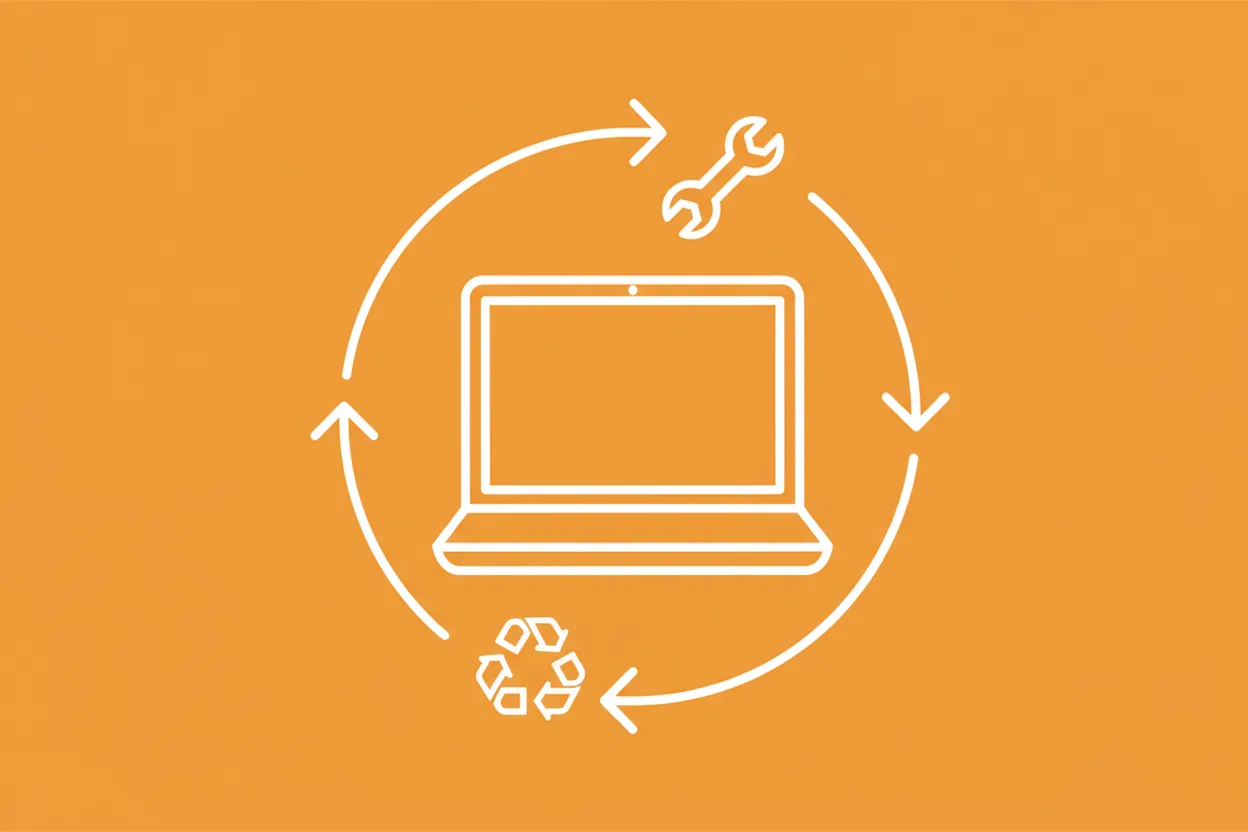
Circularity means designing and using products so they stay useful and valuable for as long as possible by reusing, repairing, or recycling them instead of throwing them away.
Too much waste ends up in landfills because products aren’t made to last or be fixed, causing pollution and resource loss. This linear way of using things—take, make, dispose—hurts the planet and wastes money.
Switching to circularity helps by keeping materials circulating in the economy, reducing waste and pollution, and saving resources like water and minerals. It opens doors for businesses to innovate and for communities to live more sustainably.
Definition: circularity
Circularity focuses on designing products, materials, and resources to stay in use within the economy as long as possible. It replaces the typical "take, make, waste" model by emphasizing reuse, repair, and recycling to reduce waste and protect the environment from harm.
Circularity reduces waste by emphasizing reuse, repair, and recycling. It focuses on keeping products and materials in use within the economy as long as possible.
For example, a phone designed for circularity might allow parts to be replaced or upgraded instead of discarding the whole device. This approach saves resources and cuts down on pollution by extending the product’s life rather than creating new waste.
How Europe paved the way for a circular economy
Have you ever wondered where the idea of using resources more wisely began? Decades ago, experts noticed that the usual "take, make, dispose" way of doing things wasn’t sustainable. This sparked early discussions about finding smarter ways to reduce waste and save resources.
Back in the 1970s, a report called "Limits to Growth" shed light on the risks of running out of resources. Soon after, researchers proposed an economy that loops resources back instead of throwing them away. This approach not only helps the environment but also creates jobs and strengthens the economy by focusing on reuse and recycling.
Fast forward to 2014, Europe made big moves by launching a plan to boost circular practices across industries. This plan covers everything from product design and consumption to managing waste and encouraging recycled materials. It’s a clear sign of Europe’s commitment to leading the way in circularity.
The journey shows how early ideas grew into solid policies supporting sustainability and circular economy. This history highlights the power of thoughtful planning in shaping a greener future for all.
6 examples on closing the loop in product lifecycles
Here are some practical ways businesses and communities keep materials in use and reduce waste:
- Product take-back programs: Companies collect used goods to recycle or refurbish, promoting extended producer responsibility. This reduces landfill waste and recovers valuable materials.
- Refillable packaging: Brands offer containers designed to be reused multiple times, cutting down on single-use waste. This supports a circular approach to packaging.
- Modular design: Products are made with parts that can be easily replaced or upgraded, extending their life. This encourages repair over disposal.
- Material recovery facilities: Specialized centers sort and process recyclables to extract high-quality materials for manufacturing. This boosts recycling efficiency.
- Composting organic waste: Food scraps and plant materials return to the soil as nutrients, closing the biological loop. This reduces landfill methane emissions.
- Leasing models: Instead of selling products, companies lease them, taking responsibility for maintenance and reuse. This aligns with producer responsibility goals.
Many industries still rely heavily on disposable products and linear use patterns, which create waste and pollution. Shifting to these examples can help change how resources move through the economy.
Terms related to sustainable resource use
Many products and processes aim to reduce waste and make better use of materials to protect our planet.
| Term | Description |
|---|---|
| Sustainability | Meeting present needs without harming future generations' ability to meet theirs. |
| Resource efficiency | Using materials, energy, and water in a way that minimizes waste. |
| Waste management | Collecting, treating, and disposing of waste to reduce environmental impact. |
| Recycling | Turning used materials into new products to avoid waste and save resources. |
| Eco-design | Designing products to be more environmentally friendly throughout their life. |
| Life cycle assessment | Evaluating a product's environmental impact from creation to disposal. |
| Renewable resources | Materials that can naturally replenish, like wood or solar energy. |
Frequently asked questions on circularity
Here are answers to common questions about circularity and how it helps the planet and businesses.
What is circularity in sustainability?
Circularity means designing products and systems to keep resources in use as long as possible, reducing waste and environmental impact. It supports sustainability by saving materials and energy.
How does resource efficiency relate to circularity?
Resource efficiency means using materials and energy wisely to get the most value with less waste. Circularity promotes this by encouraging reuse, repair, and recycling of products.
What role does waste management play in circularity?
Good waste management collects and treats waste so materials can be recycled or reused, closing the loop and preventing pollution.
How does recycling support circularity?
Recycling turns old materials into raw resources for new products, reducing the need for new extraction and lowering environmental impact.
What is eco-design and why is it important?
Eco-design means creating products with the environment in mind, focusing on durability, recyclability, and minimal waste to support circular systems.
Why use life cycle assessment in circularity?
Life cycle assessment helps measure a product’s environmental impact from start to finish, guiding better design and resource choices for circularity.
How do renewable resources fit into circularity?
Renewable resources, like plant-based materials, can regrow and are more sustainable, making them key to reducing reliance on finite resources.
What is industrial symbiosis and how does it relate to circularity?
Industrial symbiosis is when companies share resources like energy or materials, turning one’s waste into another’s input, creating efficient circular networks.
