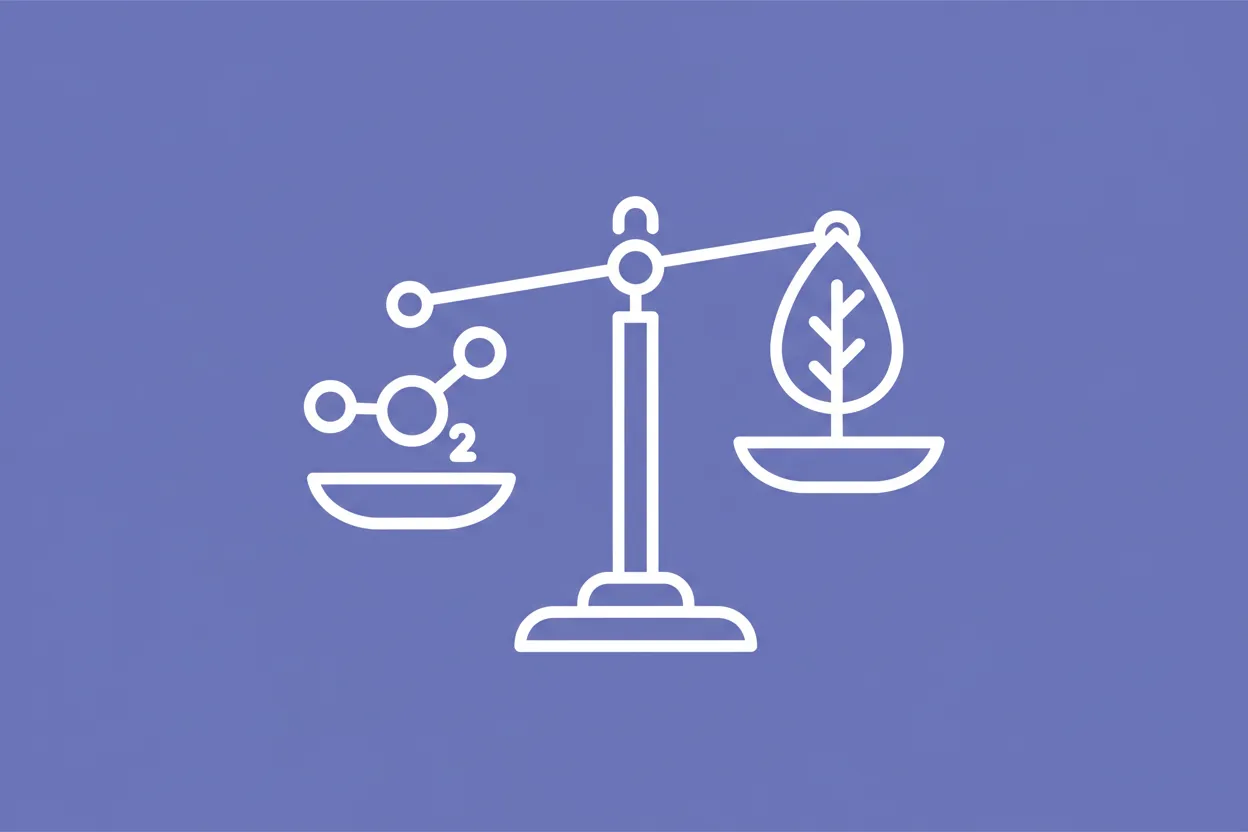
Think of climate neutrality like balancing a scale: the greenhouse gases we add to the air on one side, and the ones we remove or avoid on the other. When these sides are even, our activities don’t make the planet warmer.
Just like keeping a budget balanced means not spending more than you earn, climate neutrality means not releasing more heat-trapping gases than we can absorb or stop. It’s about making sure our planet’s "gas budget" stays steady, so climate change doesn’t get worse.
Achieving this balance takes teamwork—people, businesses, and governments all working to cut emissions and support nature’s ability to soak up carbon. Together, this helps protect the environment and build a healthier future for everyone.
Definition: climate neutrality
Climate neutrality means balancing the amount of greenhouse gases released with the amount removed or avoided. This balance ensures human activities like driving or running factories don’t add extra heat-trapping gases to the atmosphere. When something is climate neutral, it does not make climate change worse.
Climate neutrality balances the greenhouse gases we emit with the ones we remove. It means activities don’t add extra harmful gases that warm the planet.
For example, a business that switches to solar power and plants trees to absorb leftover emissions works toward climate neutrality. This way, their operations don’t increase the total greenhouse gases in the air, helping to slow global warming.
How climate neutrality became a global goal
What does it mean to balance the gases warming our planet? The idea of climate neutrality focuses on matching emissions with removals to reach net-zero impact on the climate. It’s a powerful concept getting stronger worldwide.
This goal gained real momentum with the 2015 Paris Agreement, where nearly 200 countries agreed to limit global temperature rise. The agreement set targets to balance human-caused emissions with natural or technological removals by mid-century. Europe quickly stepped up, making climate neutrality a key part of its future plans.
Many nations followed suit, adopting laws and policies to cut emissions drastically. Germany, for example, aims for net-zero by 2045 through clear legal commitments. Cities and organizations have joined the effort, sharing strategies to reduce their carbon footprints.
Climate neutrality is more than a buzzword—it’s a shared mission to protect our planet for future generations. This collective push is shaping policies, industries, and everyday choices toward a cleaner, greener world.
3 examples on ways companies reduce their environmental impact
Here are some practical approaches businesses take to lower their carbon footprint and promote sustainability:
- Renewable energy adoption: Companies switch to wind or solar power to reduce reliance on fossil fuels, cutting greenhouse gas emissions. This shift supports cleaner, more sustainable operations.
- Circular product design: Brands create goods designed for easy reuse or recycling, minimizing waste and conserving resources. This approach aligns with extended producer responsibility principles.
- Carbon offset programs: Businesses invest in projects that capture or reduce emissions elsewhere, balancing out their own environmental impact. This strategy helps achieve more sustainable production and consumption.
While some companies focus on quick fixes, like buying offsets, others redesign products and processes for lasting change. Both have different effects on sustainability goals.
Terms related to climate neutrality
Cutting emissions and using resources wisely play key roles in creating a healthier planet.
- Carbon footprint reduction: Lowering the total greenhouse gases produced by activities or products.
- Renewable energy: Power generated from natural sources like sunlight, wind, or water that don’t run out.
- Energy efficiency: Using less energy to perform the same task, saving resources and money.
- Sustainable transportation: Travel methods that reduce pollution, like biking, electric vehicles, or public transit.
- Greenhouse gas emissions: Gases released into the air that trap heat and contribute to global warming.
- Circular economy: A system where products and materials are reused, repaired, and recycled to limit waste.
- Carbon offsetting: Balancing out emissions by investing in projects that reduce or capture greenhouse gases.
- Climate change mitigation: Actions taken to slow down or prevent harmful changes in Earth’s climate.
- Sustainable development: Growth that meets current needs without harming the ability of future generations to thrive.
Frequently asked questions on climate neutrality
Climate neutrality means balancing the amount of greenhouse gases we emit with the amount we remove or offset, aiming for zero net emissions.
What is carbon footprint reduction?
Reducing your carbon footprint means cutting down the greenhouse gases you create daily. This can be done by using less energy, choosing cleaner transport, or consuming fewer resources. Every small change counts toward climate neutrality.
How does renewable energy help achieve climate neutrality?
Renewable energy comes from sources like the sun, wind, and water. Using these instead of fossil fuels lowers greenhouse gas emissions, making it easier to reach climate neutrality and protect our planet.
What role does the circular economy play in climate neutrality?
The circular economy focuses on reusing, recycling, and repairing products to reduce waste and resource use. This approach cuts emissions from production and waste, supporting a climate-neutral future.
How can energy efficiency contribute to climate neutrality?
Energy efficiency means using less energy to do the same tasks. By making homes, businesses, and transport more efficient, we reduce emissions and help meet climate neutrality goals.
What is carbon offsetting, and how does it support climate neutrality?
Carbon offsetting involves funding projects that reduce or capture emissions, like planting trees, to balance out your own emissions. It’s a helpful tool to achieve climate neutrality when cutting emissions isn’t enough.
