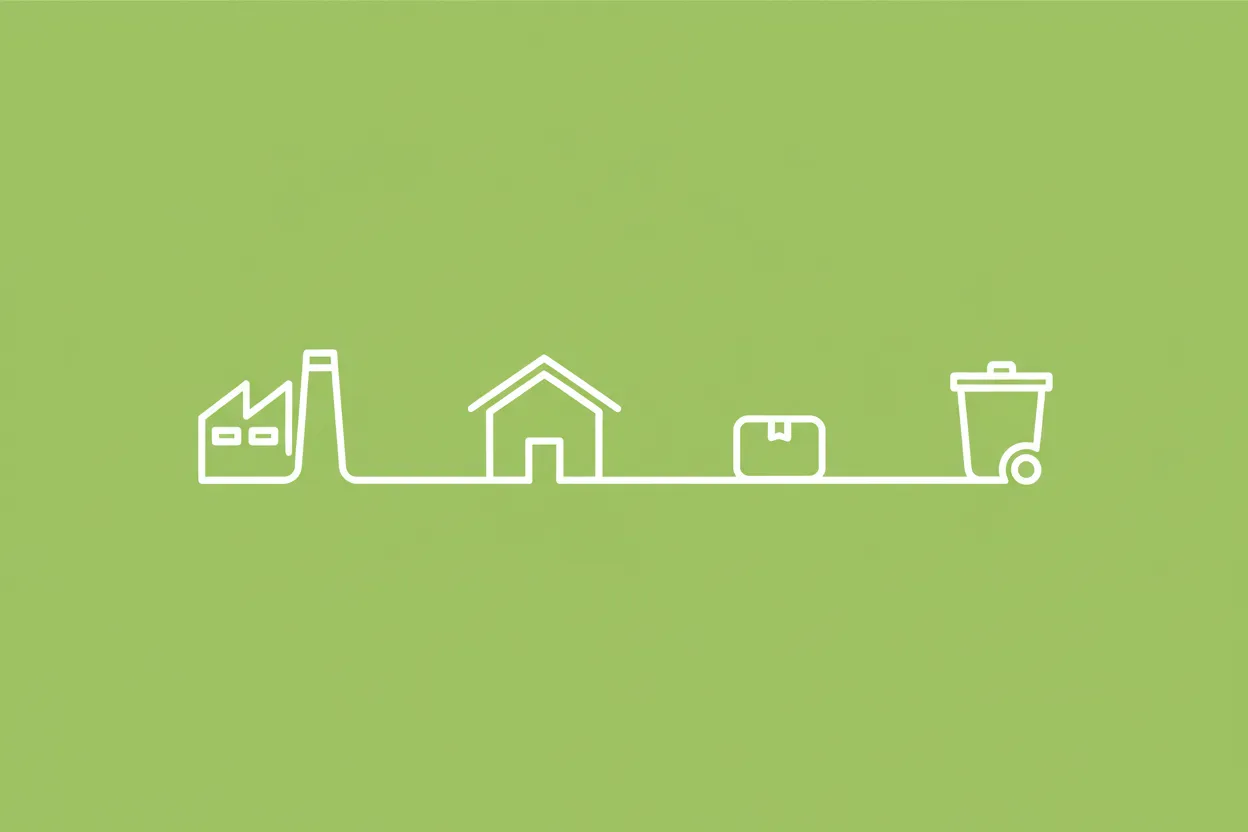
Think of a product’s life like a storybook, starting from the moment it’s made until it’s thrown away—this full journey is what Cradle-to-Grave tracks. It’s like following a package from the factory to your home and then to the trash bin, showing every step along the way.
This journey is similar to how a tree grows, thrives, and eventually falls, impacting the soil and forest around it. Cradle-to-Grave helps us see how a product uses resources and creates waste throughout its life, just like that tree’s full story matters to the forest.
By knowing the full path, from beginning to end, we can make smarter choices about what we buy and how companies design products. It’s a simple way to understand the whole environmental impact and find ways to reduce waste and save valuable materials.
Definition: Cradle-to-Grave
Cradle-to-Grave is a way to track everything a product goes through, from when it’s made until it’s thrown away. It looks at how raw materials are used, the energy during use, and what happens at disposal to understand the full environmental impact of that product.
Cradle-to-Grave looks at what happens at disposal to understand the full environmental impact. It tracks everything a product goes through, from when it’s made until it’s thrown away.
For example, when you buy a new phone, Cradle-to-Grave thinking means considering how the materials were taken from nature, how long the phone will last, and what happens to it when you recycle or throw it away. This helps you see the phone’s full effect on the environment, not just when you use it.
How product life cycles have shifted toward sustainability
Have you ever wondered what happens to products once we throw them away? The traditional Cradle-to-Grave model tracks a product from raw materials to disposal, highlighting its environmental impact at each step. This linear path often leads to waste buildup and resource depletion.
Back in the 1960s, growing industrial pollution made it clear that simply discarding products after use wasn’t working. This sparked the development of Life Cycle Assessment (LCA), a tool to measure environmental effects across a product’s entire journey. The 1990s then brought a fresh idea called Cradle-to-Cradle, which designs products to be endlessly reused or recycled, avoiding waste entirely.
Today, Europe has embraced these circular economy ideas through policies like the Ecodesign Directive. This encourages creating products that last longer, can be repaired easily, and are simpler to recycle. These changes help reduce waste and conserve resources for future generations.
Shifting from Cradle-to-Grave to Cradle-to-Cradle shows how industries can take responsibility for their products, supporting Extended Producer Responsibility (EPR). This shift is a powerful step toward a greener, more circular world. 4 examples on product life cycle from start to finish
Here are some clear examples that show how products go through every stage of their life, from creation to disposal:
- Single-use plastic bottles: These are produced, used once, and then thrown away, highlighting the challenge of managing waste that doesn’t get recycled effectively. Their life cycle often ends in landfills or oceans.
- Disposable coffee cups: Made for convenience, they combine paper and plastic, making recycling difficult. Most end up as waste after a single use.
- Old electronics: Devices like phones are manufactured, used, and discarded. Without proper recycling programs, valuable materials inside them are lost forever.
- Food packaging: Often designed for short use, these materials are discarded quickly, contributing to landfill waste unless compostable options are used.
Most products follow this linear path, which leads to large amounts of waste and lost resources. Finding ways to extend product life or reuse materials can change this pattern.
Terms related to product life and waste journey
Many products follow a path from creation to disposal, impacting the environment along the way.
- Life Cycle Assessment (LCA): A method to measure the environmental effects of a product from start to finish.
- Waste Management: The process of handling waste to reduce harm and promote recycling or disposal.
- Product Life Cycle: The stages a product goes through, from making to using and finally discarding.
- Environmental Impact: The effect products and activities have on nature and ecosystems.
- Resource Efficiency: Using materials and energy wisely to minimize waste and harm.
- Circular Economy: An approach that keeps materials in use longer by recycling and reusing.
- Sustainable Design: Creating products that reduce environmental harm and last longer.
- End-of-Life Treatment: How products are processed when they are no longer useful or wanted.
Frequently asked questions on cradle-to-grave concepts
Explore key points about the journey of a product from creation to disposal, focusing on sustainability and circularity.
What is cradle-to-grave in product life cycle?
Cradle-to-grave covers every stage of a product’s life, from raw material extraction through manufacturing, use, and final disposal, highlighting environmental impacts at each step.
How does cradle-to-grave relate to life cycle assessment (LCA)?
LCA uses cradle-to-grave data to measure a product’s total environmental footprint, helping companies improve sustainability and reduce waste.
Why is waste management important in cradle-to-grave?
Proper waste management at the end of the product’s life reduces pollution and recovers materials, supporting circular economy goals.
How does cradle-to-grave address resource efficiency?
By tracking resource use throughout the product’s life, cradle-to-grave helps identify ways to use materials more wisely and minimize waste.
What role does energy consumption play in cradle-to-grave?
Energy use during manufacturing, transport, and disposal affects the product's overall environmental impact and guides improvements in sustainability.
How is sustainable design linked to cradle-to-grave?
Sustainable design focuses on creating products that are easier to recycle or reuse, reducing negative impacts throughout their cradle-to-grave journey.
In what way does cradle-to-grave support circular economy principles?
Cradle-to-grave highlights where materials are lost and encourages redesigning systems to keep resources in use longer, moving toward a circular economy.
