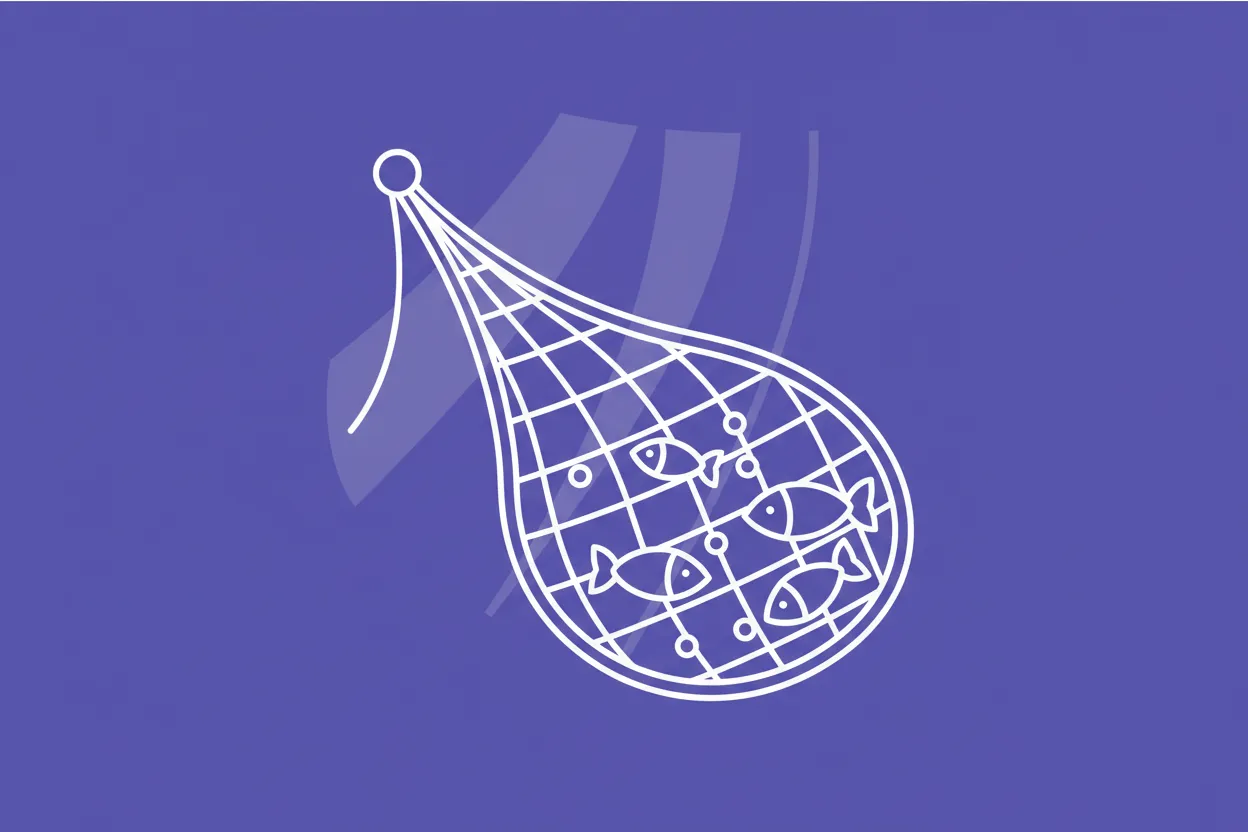
Think of a codend like the pouch at the end of a butterfly net where your catch gathers, holding everything until you’re ready to look. It’s the part of a fishing net shaped like a bag where fish swim in but can’t easily escape, making it essential for collecting the catch.
Just as a backpack’s size and design control what you can carry comfortably, the codend’s mesh size and shape decide which fish are kept and which can slip away. This helps protect younger fish and keeps fishing sustainable, balancing the needs of fishermen and ocean health.
Like choosing reusable containers to reduce waste, selecting the right materials and features for a codend can reduce pollution and bycatch, making fishing more responsible. Better codends support a circular economy by allowing nets to be repaired or recycled, leading to healthier seas and future harvests.
Definition: codend
A codend is the end part of a fishing net shaped like a bag where the catch gathers. It’s attached to the main net and traps fish as the net is dragged through the water, holding them until pulled aboard. Its design helps control which fish are caught or released.
The codend holds fish until they are pulled aboard. It traps fish as the net is dragged through the water.
Think of the codend like a pouch at the end of a butterfly net that collects what you catch. If the pouch has bigger holes, smaller butterflies escape, just like small fish can swim out through larger mesh codends. This helps protect younger fish and keeps the ocean balanced.
Clearing up myths about codend and sustainable fishing
Have you ever wondered if bigger mesh sizes in fishing nets always help reduce unwanted catches? Many believe that simply increasing mesh size in the codend lets smaller fish escape, but the reality is more complex. This common idea doesn’t always hold true in practice.
In some fisheries, like those in the Yellow Sea, changing mesh size didn’t significantly reduce bycatch. Codend design, including shape and materials, plays a bigger role than just mesh size. Also, the survival of fish that escape depends on these factors, affecting how sustainable fishing really is.
Why does this matter? Keeping juvenile fish out of the catch helps maintain healthy fish populations and supports long-term fishing success. Overlooking codend design details can lead to more discarded fish and damage to marine ecosystems.
The takeaway: thinking beyond just mesh size leads to better fishing gear. This approach supports sustainability and healthier oceans for everyone.
3 examples on selective fishing gear designs
Here are some ways fishing gear is designed to protect marine life and reduce waste:
- Mesh size regulation: Using larger mesh sizes allows smaller, juvenile fish to escape, promoting sustainable fish populations. This simple change helps prevent overfishing and supports circular use of marine resources.
- Bycatch reduction devices: These are special attachments that let unwanted species escape the net, minimizing waste and harm to non-target animals. This practice aligns with extended producer responsibility to reduce environmental impact.
- Escape panels: Panels made of biodegradable materials give trapped fish a chance to swim free if they are too small or unwanted. This design reduces discard waste and supports sustainable fishing practices.
Some fishing methods catch everything in their path, causing high waste and ecosystem damage. Selective gear designs, by contrast, help protect marine life while still allowing fishermen to harvest responsibly.
Terms related to the end part of a fishing net
The final section of a trawl net plays a key role in controlling which fish are caught and which escape, helping promote sustainable fishing.
| Term | Description |
|---|---|
| Trawl net | A large fishing net pulled along the sea floor or midwater to catch fish. |
| Bycatch | Unintended marine creatures caught during fishing. |
| Mesh size | The size of the holes in a fishing net, which affects what species and sizes are caught. |
| Selective fishing | Using gear or methods that target specific species to reduce bycatch. |
| Fish stock | The population of a particular fish species in a region. |
| Fisheries management | Rules and practices to maintain healthy fish populations and ecosystems. |
| Marine conservation | Efforts to protect ocean habitats and species from overfishing and damage. |
| Fishing regulations | Laws governing fishing methods, gear, and catch limits to ensure sustainability. |
Frequently asked questions about codend
Here are answers to some common questions about codends and how they relate to sustainable fishing.
What is a codend in fishing gear?
A codend is the mesh bag at the end of a trawl net where fish collect. It plays a key role in determining which fish are caught and which can escape, helping reduce unwanted catch.
How does net mesh size affect bycatch reduction?
The size of the net mesh in the codend controls which fish can pass through. Larger mesh lets smaller, non-target species escape, reducing bycatch and supporting healthier fish populations.
Why is fish stock management important in fisheries sustainability?
Managing fish stocks ensures that fishing doesn’t deplete populations faster than they can reproduce. This supports long-term fishing opportunities and marine ecosystem health.
How do fishing regulations support marine conservation?
Rules about gear types, mesh sizes, and catch limits help protect marine life and habitats. They encourage sustainable fishing practices that keep ocean ecosystems balanced.
What role does the codend play in sustainable fishing practices?
By choosing the right codend design and mesh size, fishermen can target desired species while allowing juveniles and non-target fish to escape, promoting a more sustainable catch.
How does sustainable fishing impact circular economy goals?
Sustainable fishing helps keep fish populations healthy, reducing waste and supporting resource reuse. This fits into circular economy ideas by keeping natural resources in use longer.
What is bycatch and why should it be reduced?
Bycatch is the accidental capture of unwanted species. Reducing bycatch protects marine biodiversity and ensures more efficient use of fish resources, benefiting both the environment and fishing communities.
