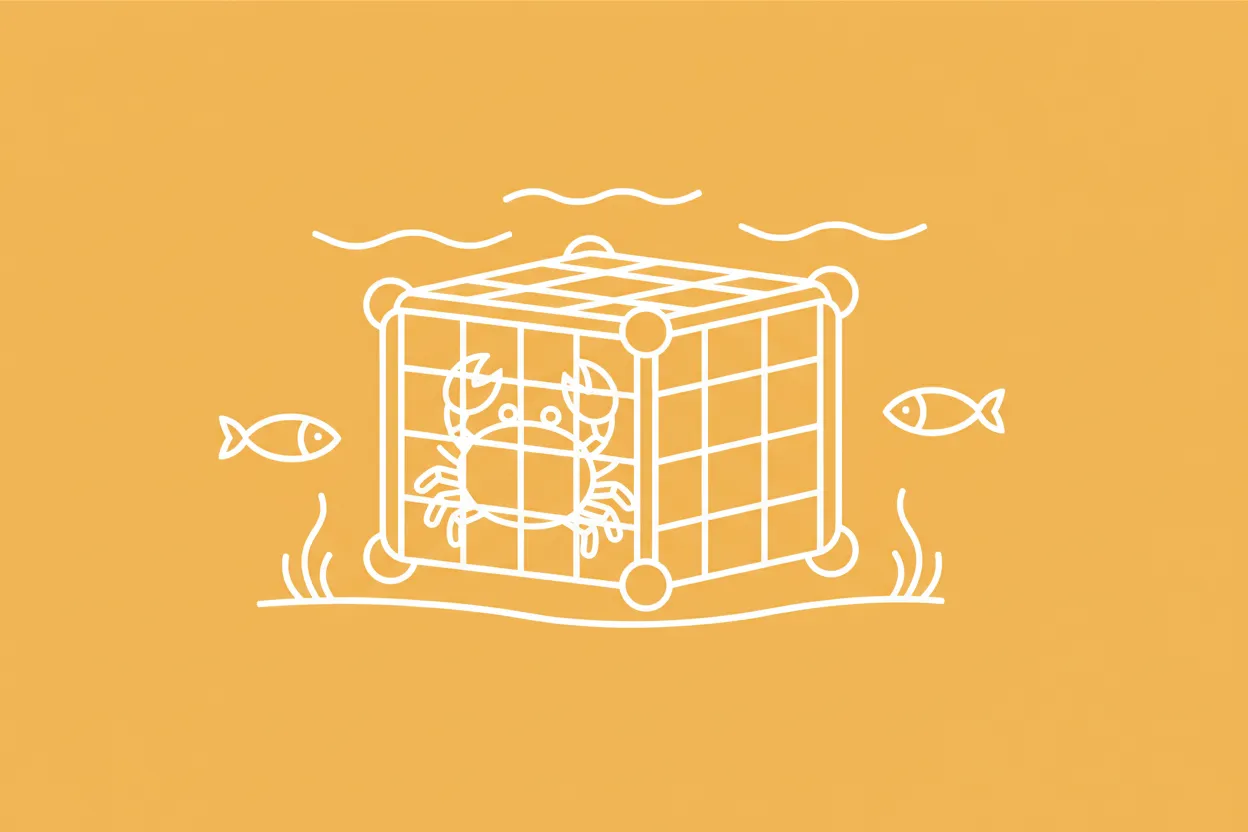
Crab pots are clever traps designed to catch crabs in oceans or coastal waters by letting them enter easily but making it hard for them to escape. These traps usually have metal or plastic frames covered with mesh and often include bait to attract crabs.
This design causes less damage to underwater habitats compared to nets that drag along the sea floor, helping to protect important ecosystems. Plus, crab pots can be reused many times, meaning less waste and a smaller need for new materials, making them a good fit for circular economy ideas.
Lost or abandoned crab pots can keep trapping sea creatures unintentionally, a problem known as ghost fishing. To prevent this, many crab pots now have features like biodegradable panels that let trapped animals escape, showing how thoughtful design supports both sustainability and marine life protection.
Definition: crab pot
A crab pot is a trap used to catch crabs in oceans or coastal waters. It is built to let crabs enter easily but makes it hard for them to escape. Usually made of metal or plastic frames and covered with mesh, crab pots often contain bait to attract crabs.
Crab pots let crabs enter easily but make escape difficult. They are traps designed specifically for catching crabs in coastal waters.
For example, a fisherman sets a crab pot baited with fish inside a coastal bay. Crabs crawl in through an opening, attracted by the bait. Once inside, they cannot find their way out, making it easy for the fisherman to collect them later. This method catches crabs without dragging nets or damaging the sea floor.
Clearing up common myths about crab pots
Ever wondered if crab pots harm the ocean floor or catch too many unintended marine animals? Many people worry that these traps might damage underwater habitats or snare creatures that aren't meant to be caught. It’s important to separate fact from fiction when looking at how crab pots work.
Crab pots actually cause very little disturbance to the seabed because they rest lightly and use small anchors. Bycatch is kept low thanks to smart designs like escape gaps and the right mesh sizes, so most non-target species can swim away safely. This shows how responsible use helps protect marine life and supports a circular approach to fishing gear use.
Do crab pots demand constant checking and maintenance? Not always. Depending on conditions like water depth, they can stay in place for extended periods and still collect a steady catch. This efficiency reduces unnecessary trips, saving energy and resources.
Crab pots aren’t just for large fishing companies; hobby fishers use them too. Their versatility means people of all scales can contribute to sustainable crab fishing. This helps spread responsibility and encourages a shared effort in protecting marine environments.
3 examples on sustainable fishing gear innovations
Here are some ways fishing equipment is being improved to reduce environmental impact and promote circularity:
- Biodegradable traps: These traps break down naturally if lost at sea, preventing ghost fishing and reducing marine waste. They support ecosystems by avoiding long-term pollution.
- Recycled material nets: Nets made from recycled plastics help cut down on new plastic use and keep waste out of oceans. This promotes a circular economy by giving old plastics a second life.
- Modular design pots: Designed so parts can be replaced or repaired easily, these pots extend product life and minimize waste. This approach aligns with extended producer responsibility by encouraging manufacturers to think beyond initial sale.
While older fishing gear often ends up abandoned or broken, these smarter designs show how innovation can help protect marine life and support sustainable industries. The shift from disposable to durable and recyclable gear marks real progress in reducing ocean pollution.
Terms related to crab fishing gear
Crab fishing relies on specialized tools that support sustainable seafood practices and protect marine life.
- Trap: A cage-like device used to catch crabs without harming other sea creatures, helping reduce bycatch.
- Bycatch Reduction Device: A tool added to traps to allow non-target species to escape, promoting marine conservation.
- Ghost Gear: Lost or abandoned fishing equipment that can harm aquatic ecosystems and contribute to marine pollution.
- Biodegradable Panels: Parts of traps designed to break down naturally, supporting circular economy efforts in fisheries.
- Pot Hauler: A mechanical system that helps fishermen retrieve traps efficiently, reducing damage to coastal habitats.
Frequently asked questions on crab pots
Crab pots are essential tools in fishing, and many wonder how they relate to sustainability and marine health.
What is a crab pot in crab fishing?
A crab pot is a cage-like trap used to catch crabs. It's placed on the seafloor, baited inside, allowing crabs to enter but not escape, making crab fishing efficient and selective.
How do crab pots support sustainable seafood?
Crab pots help minimize damage to the ocean floor and reduce bycatch, supporting sustainable seafood by targeting only crabs and allowing other species to swim free.
How does fishing gear technology improve crab pots?
Modern crab pots use biodegradable materials and escape vents, reducing ghost fishing and waste, helping protect marine life and promoting circular economy principles.
What role do crab pots play in marine conservation?
When used properly, crab pots help maintain healthy crab populations and protect other species, contributing to balanced aquatic ecosystems and conservation efforts.
How can crab pots reduce bycatch?
Bycatch reduction comes from designing crab pots with escape openings and selective bait, ensuring non-target species can avoid capture and reducing wasteful fishing.
What is the impact of crab pots on marine pollution?
Lost or abandoned crab pots can cause "ghost fishing," trapping marine life endlessly. Using biodegradable pots helps reduce this pollution and supports cleaner oceans.
How do crab pots fit into coastal fisheries management?
Crab pots are regulated to control catch limits and seasons, helping manage crab stocks sustainably and supporting local fishing communities' long-term livelihoods.
