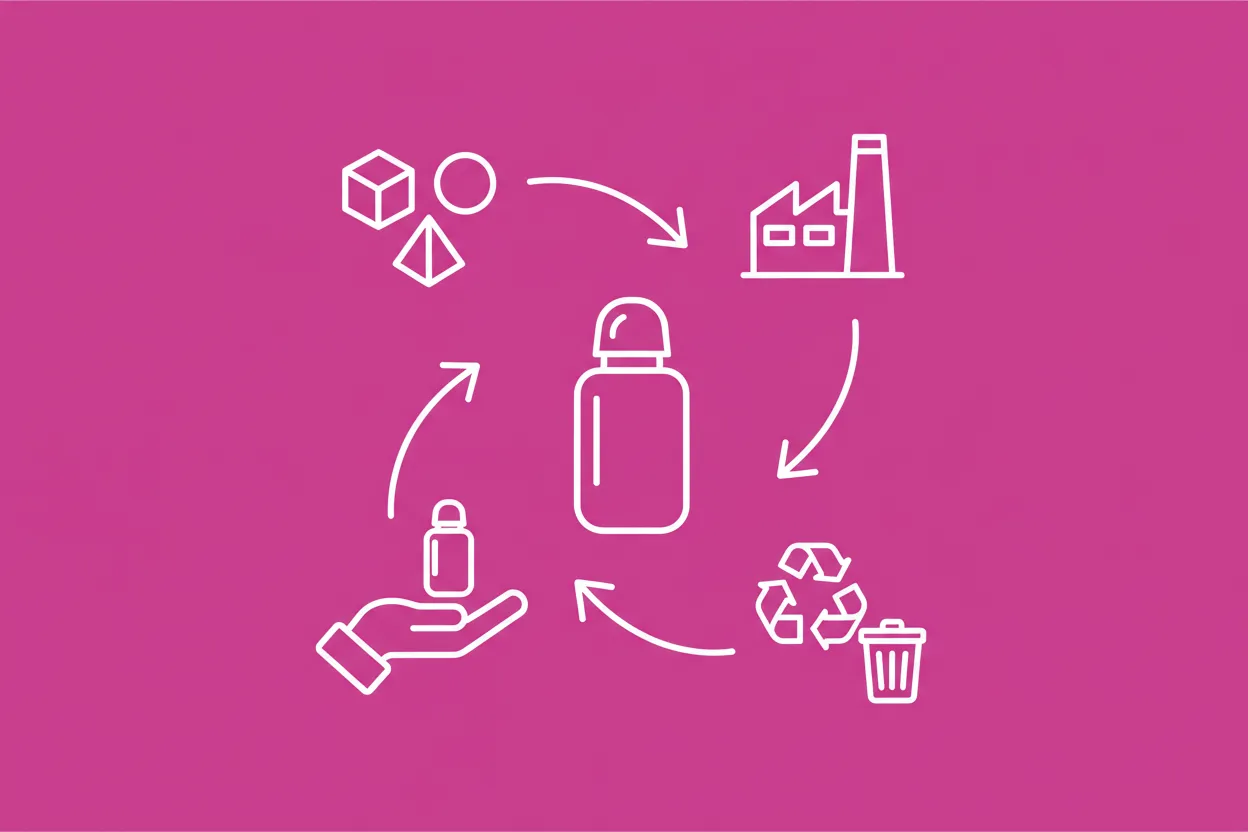
Think of a product’s journey like a story that starts with gathering ingredients, moves through cooking, serving, and finally cleaning up. This story is called the product lifecycle, and it shows every step from making something to when it’s thrown away or recycled.
Just as a meal’s impact depends on where the ingredients come from and how it’s prepared, a product’s lifecycle reveals how much energy and resources it uses. Looking at this full journey helps companies and people choose greener options that protect our planet.
Like enjoying leftovers instead of wasting food, extending a product’s life through repair or recycling is a smart way to save resources. The product lifecycle encourages us to think about what happens at each stage—so we can all make choices that help reduce waste and support a circular economy.
Definition: product lifecycle
A product lifecycle is the full journey of a product from when it’s made until it’s no longer useful and gets thrown away or recycled. It tracks the environmental impact at every stage, helping businesses and people choose greener options.
It tracks the environmental impact at every stage, helping businesses and people choose greener options. A product lifecycle is the full journey of a product from when it’s made until it’s no longer useful and gets thrown away or recycled.
For example, think about a smartphone. It starts with mining metals, then manufacturing parts, shipping to stores, being used daily, and finally either recycled or discarded. Each step affects the planet differently, and knowing this helps us choose phones that last longer or are easier to recycle.
How product journeys have changed over time
Have you ever wondered how the way we make and use products has shifted through history? Products didn’t always have short lifespans or end up as waste quickly. The story of product lifecycles shows how manufacturing, consumer habits, and environmental care have changed over time.
Long ago, products were built to last. Craftspeople focused on making durable items that could be repaired and reused, reducing waste naturally. Then, as industries grew, many products were designed to wear out sooner, encouraging people to buy more often. This shift led to more waste and resource use, raising environmental concerns.
Today, the focus is on designing products that fit within a circular economy. This means making things that last longer, can be fixed, and eventually recycled. Policies like Extended Producer Responsibility (EPR) help ensure companies take care of their products from start to finish, reducing environmental impact.
New technology also plays a role. Digital twins, or virtual copies of products, help track and improve products as they’re used. This helps avoid waste and supports smarter, more sustainable product lifecycles.
The journey of product lifecycles reminds us that smarter design and responsibility can lead to less waste and a healthier planet.
4 examples on how products change from start to finish
Here are some ways products go through different stages before they reach us and eventually leave us with choices for disposal or reuse:
- Raw material extraction: This is when natural resources like metals or plants are gathered. It sets the stage for everything that follows in making the product.
- Manufacturing and assembly: Materials are turned into usable products. Efficient processes here can reduce waste and energy use.
- Use and maintenance: Products are being used by consumers, often requiring care to last longer. How we treat items affects their environmental impact.
- End-of-life management: Items are recycled, reused, or discarded. Responsible handling here helps close the loop in sustainability.
Some products never make it to recycling due to design or consumer habits, while others are created with clear plans for reuse. This difference hugely affects how much waste ends up in landfills or gets a new life.
Terms related to product journey and impact
Many products go through several stages that affect the environment and resources used, making it important to consider sustainability at every step.
| Term | Description |
|---|---|
| Circular Economy | A system focused on reusing, repairing, and recycling to keep materials in use longer. |
| Sustainable Design | Creating products with minimal environmental impact while meeting user needs. |
| Environmental Impact Assessment | A process to evaluate how a product or project affects the environment before it begins. |
| Resource Efficiency | Using fewer materials and energy to produce goods without compromising quality. |
| Waste Management | Processes involved in handling, recycling, or disposing of waste safely and responsibly. |
| Supply Chain Management | Overseeing the flow of materials from raw resources to finished products, aiming to reduce waste. |
| Eco-Design | Designing products with the environment in mind, focusing on reducing harmful effects. |
| Life Cycle Assessment (LCA) | A method to measure the environmental impact of a product from creation to disposal. |
| Product Stewardship | Shared responsibility of producers and users to minimize a product's environmental impact. |
| Extended Producer Responsibility (EPR) | A policy approach where producers take responsibility for the disposal and recycling of their products. |
Frequently asked questions on product lifecycle
Here are answers to common questions about how products impact the environment through their entire life.
What is a circular economy?
A circular economy keeps materials in use for as long as possible by reusing, repairing, and recycling products. This reduces waste and the need for new resources, helping protect the environment and save money.
How does sustainable design affect product lifecycle?
Sustainable design focuses on creating products that use fewer resources, last longer, and are easier to recycle. This lowers environmental impact and supports a circular economy by making products more responsible from the start.
What is life cycle assessment (LCA)?
LCA is a method to measure the environmental impact of a product from raw materials through disposal. It helps companies understand where improvements can reduce waste, emissions, and energy use throughout the product’s life.
Why is resource efficiency important?
Resource efficiency means using materials and energy wisely to minimize waste. Efficient use reduces environmental harm, cuts costs, and supports sustainable production, which is essential for circularity and long-term resource availability.
What role does waste management play in product stewardship?
Waste management ensures that products are properly collected, sorted, and recycled or disposed of safely. Effective waste management supports product stewardship by holding producers accountable for their products even after use, encouraging better design and recycling.
