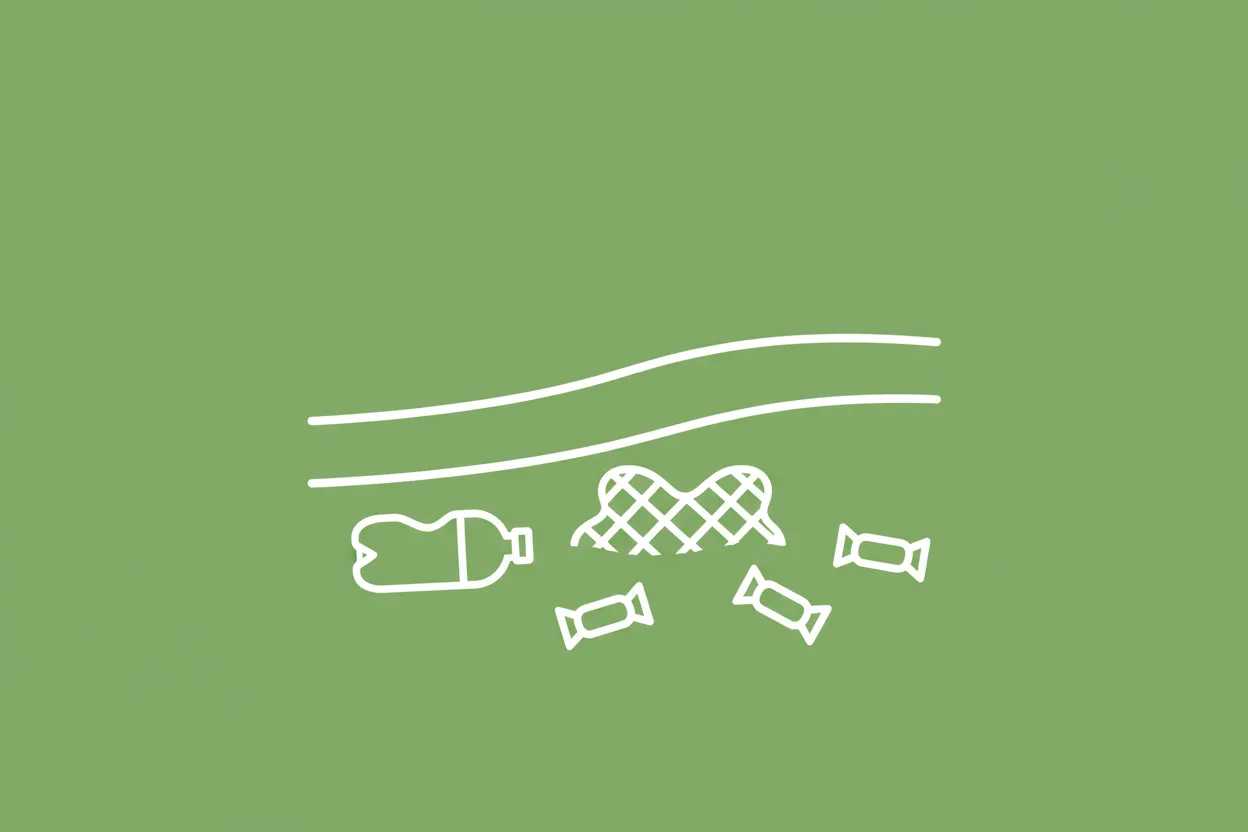
Trash on a beach is like crumbs scattered on a kitchen floor—easy to spot and hard to ignore. Beach litter is the waste left behind by people or washed ashore from the sea, including plastic bottles, wrappers, and fishing nets. Just like crumbs attract ants, this litter harms animals and spoils the beauty of beaches.
Think of beach litter as a messy room where trash keeps piling up, making it harder for everyone to enjoy the space. It comes from many places—left by visitors, carried by rivers, or lost from boats—and breaks down into tiny pieces called microplastics that harm wildlife and people. Keeping beaches clean means protecting nature and ourselves.
Definition: beach litter
Beach litter is trash found on beaches or washed ashore from the sea. It includes plastic bottles, wrappers, cigarette butts, fishing nets, and larger items like tires. This waste harms the environment, animals, and people enjoying the beach.
Beach litter harms the environment, animals, and people enjoying the beach. It includes trash found on beaches or washed ashore from the sea.
For example, plastic bottles left behind by visitors or carried by rivers can break down into tiny pieces called microplastics. These microplastics can be eaten by fish and birds, harming wildlife and eventually affecting humans who eat seafood.
Where does beach litter really come from?
Have you ever wondered how trash ends up scattered along the shore? A large share of beach litter starts far from the coast, often from everyday life on land. Plastics from homes and streets travel through rivers and drains, eventually reaching the sea and washing up on beaches.
Waste from boats and fishing gear adds to the problem too. Items like nets, ropes, and other gear used in fishing and shipping sometimes break loose or get discarded at sea, drifting ashore. Coastal tourism also plays a part, as visitors may leave behind waste that finds its way into the ocean.
The amount and type of litter change with the seasons. Summer months often see more beach waste, especially plastics and textiles, when more people visit the coast. This seasonal shift highlights how human activity patterns influence pollution levels.
Different parts of Europe face unique challenges. Enclosed seas like the Mediterranean and Black Sea trap more litter from surrounding lands. Tackling beach litter means addressing waste sources both on land and at sea, focusing on plastics and reducing waste at its origin.
3 examples on common types of waste found near the shore
Here are some typical items that often end up washed up on coastlines and show the impact of waste on marine environments:
- Plastic bottles: These are one of the most frequent pieces of litter found near water. Their durability means they can last for decades, slowly breaking into microplastics.
- Food wrappers: Lightweight and colorful, these often come from snacks and are carried by wind or water currents. They contribute to pollution and are harmful to wildlife.
- Fishing nets: Lost or discarded nets, known as ghost nets, can trap marine animals and damage coral reefs. They pose a serious threat to biodiversity.
While some waste breaks down quickly, many items persist in the environment, causing long-term harm. This contrast shows why reducing litter at the source matters so much.
Terms related to pollution along the shore
Coastal areas often face pollution challenges that affect marine life and human health.
| Term | Description |
|---|---|
| Marine pollution | Contamination of ocean and coastal waters by harmful substances. |
| Plastic waste | Discarded plastic items that contribute to environmental harm. |
| Coastal cleanup | Organized efforts to remove trash from shorelines. |
| Ocean conservation | Actions aimed at protecting marine environments. |
| Environmental impact | The effect human activities have on natural ecosystems. |
| Waste management | Processes for handling and disposing of waste properly. |
| Microplastics | Tiny plastic particles that pollute water and harm wildlife. |
Frequently asked questions on beach litter
Beach litter affects more than just the shoreline—it impacts marine life, ecosystems, and our planet’s health. Here are answers to the questions people ask most.
What is marine pollution and how does beach litter contribute?
Marine pollution happens when harmful substances, like plastics and chemicals, enter the ocean. Beach litter often washes into the sea, adding to this pollution and harming marine animals and habitats.
Why is plastic waste such a big problem on beaches?
Plastic waste doesn’t break down easily and can stay in the environment for hundreds of years. On beaches, it harms wildlife, pollutes water, and can even enter the food chain as tiny particles.
How do coastal cleanups help the environment?
Coastal cleanups remove trash from beaches before it reaches the ocean. This reduces pollution, protects marine life, and encourages communities to take responsibility for waste.
What role does ocean conservation play in fighting beach litter?
Ocean conservation focuses on protecting marine ecosystems and reducing pollution. It promotes better waste management and sustainable habits, helping keep beaches and oceans clean.
How does beach litter impact the environment?
Beach litter affects water quality, harms animals that mistake trash for food, and damages habitats. It also disrupts the natural beauty and health of coastal areas.
What are effective waste management practices for reducing beach litter?
Good waste management includes proper disposal, recycling, and Extended Producer Responsibility (EPR), where companies help manage their products’ waste to keep beaches cleaner.
How do marine ecosystems suffer from beach litter?
Marine ecosystems rely on clean water and habitats. Beach litter can smother coral reefs, poison animals, and block sunlight, which all harm the delicate balance of ocean life.
What are microplastics and why are they a concern in beach litter?
Microplastics are tiny plastic pieces that come from larger trash breaking down. They’re hard to remove, can enter marine food webs, and pose risks to wildlife and humans.
