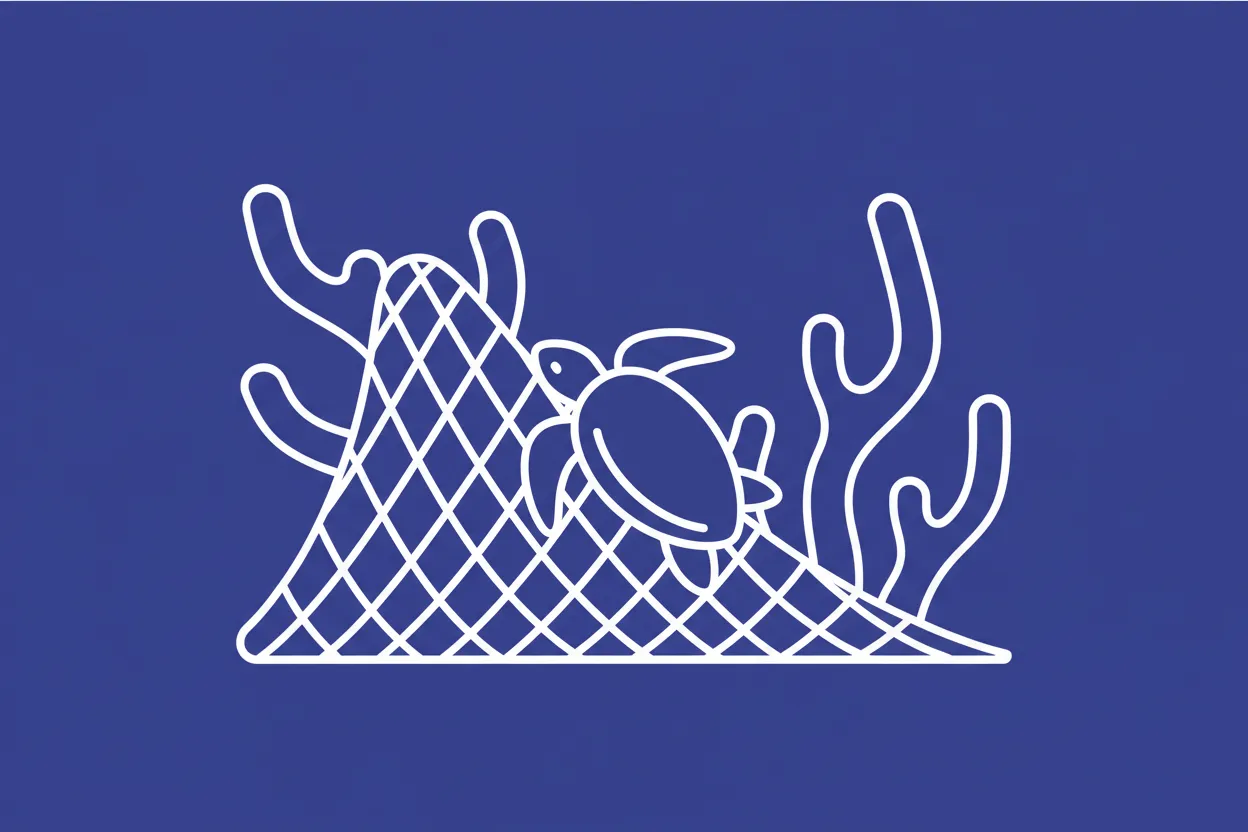
Picture a fishing boat pulling in a net that’s partly made of plastic—strong, light, and perfect for catching fish. But when pieces of this gear are lost at sea, they don’t just disappear. Instead, they drift underwater, trapping fish, turtles, and seabirds without anyone noticing.
Lost plastic fishing gear is a hidden problem in our oceans. It keeps catching marine animals long after it’s been abandoned, turning into what’s called "ghost gear." This gear can float for years, breaking down into tiny bits that enter the food chain and harm sea life.
Think of a plastic fishing net snagged on a coral reef, slowly choking the habitat and trapping creatures. Efforts to collect and recycle these plastics are growing, helping protect the ocean and support a circular economy where materials are reused instead of wasted.
Definition: fishing gear containing plastic
Fishing gear containing plastic includes tools like nets, lines, traps, and floats made partly or fully from plastic materials. These plastics are strong and lightweight but can cause pollution when lost at sea, harming marine life and ecosystems.
Lost plastic fishing gear harms marine life and pollutes oceans. It includes nets, lines, traps, and floats made from plastic materials.
Think of a fishing net made of nylon that accidentally falls into the ocean. Even though it’s no longer used, the net keeps trapping fish and turtles, damaging habitats and causing harm long after it’s lost.
How plastic became part of fishing equipment
Have you ever wondered why so much fishing gear contains plastic? The shift from natural fibers to plastic materials started around the mid-1900s. This change was driven by the search for stronger, longer-lasting fishing tools.
Synthetic polymers like nylon and polyethylene replaced hemp and cotton because they don’t rot or absorb water. These plastics are lighter and tougher, making fishing gear easier to use and more durable. This switch helped the fishing industry become more efficient but also introduced new environmental problems.
Lost or discarded plastic fishing gear, often called ghost gear, harms marine life by trapping animals and damaging habitats. This waste adds to the growing issue of ocean pollution and challenges recycling efforts.
European laws now require fishing gear producers to take responsibility for waste management. Recycling programs turn old nets into new plastic products, supporting a circular economy that benefits both nature and industry.
4 examples of common items made with plastic in the fishing industry
Plastic materials are used widely in fishing, creating products that are tough and long-lasting. Here are some key examples of plastic-based fishing gear that are crucial for the trade but often end up as waste:
- Nylon fishing nets: These nets are made from strong, flexible nylon, a plastic that resists water damage and lasts long. They are essential for catching fish but can become ghost nets if lost at sea.
- Polyethylene fishing lines: Lightweight and durable, polyethylene lines are popular among anglers but contribute to microplastic pollution when broken down.
- Plastic floats and buoys: Used to keep nets or traps afloat, these items are often made from expanded polystyrene or other plastics that can persist in the environment.
- Plastic traps and pots: Many traps rely on plastic frames or components to withstand harsh marine conditions, but discarded ones add to marine litter.
While these plastic items support efficient fishing, their durability means they can continue to pollute oceans for decades if not properly managed. Transitioning to circular solutions can help reduce this environmental impact.
Terms related to plastic pollution from fishing activities
Plastic waste from fishing gear is a major source of pollution threatening ocean health and marine life.
- Marine plastic pollution: Plastic debris accumulating in oceans, harming wildlife and ecosystems.
- Ghost fishing nets: Lost or abandoned nets that trap and kill marine animals unintentionally.
- Microplastics in oceans: Tiny plastic particles from broken-down fishing gear affecting marine organisms.
- Sustainable fishing practices: Methods that reduce environmental harm, including minimizing plastic use.
- Plastic waste management: Systems to collect, recycle, or dispose of plastic waste responsibly.
- Circular economy in fisheries: Reusing and recycling materials to reduce plastic waste from fishing gear.
- Marine biodiversity conservation: Protecting diverse ocean species from threats like plastic pollution.
- Environmental impact of plastic: The harmful effects plastic causes to ecosystems and wildlife.
- Eco-friendly fishing gear materials: Alternatives to traditional plastics that are biodegradable or less harmful.
Frequently asked questions about fishing gear containing plastic
Learn how plastic fishing gear affects the environment and what can be done to make it better.
What is ghost fishing and why is it a problem?
Ghost fishing happens when lost or abandoned fishing nets keep catching fish and sea animals. These nets trap and kill marine life, harming ecosystems and wasting resources.
How does fishing gear contribute to marine plastic pollution?
Plastic fishing gear like nets, lines, and traps often break or get lost at sea. This adds to marine plastic pollution, which harms animals and spreads microplastics through the ocean.
What are microplastics and how does fishing gear cause them?
Microplastics are tiny plastic particles under 5 millimeters. Plastic fishing gear breaks down into these small pieces, which can be eaten by sea creatures and enter the food chain.
How can fisheries adopt circular economy principles?
Fisheries can use recyclable and biodegradable materials for gear, collect old gear for reuse or recycling, and design products that last longer, reducing waste and environmental impact.
What eco-friendly materials can replace plastic in fishing gear?
Materials like biodegradable bioplastics, natural fibers, and recycled plastics can replace traditional plastic. These options reduce pollution and support more sustainable fishing practices.
