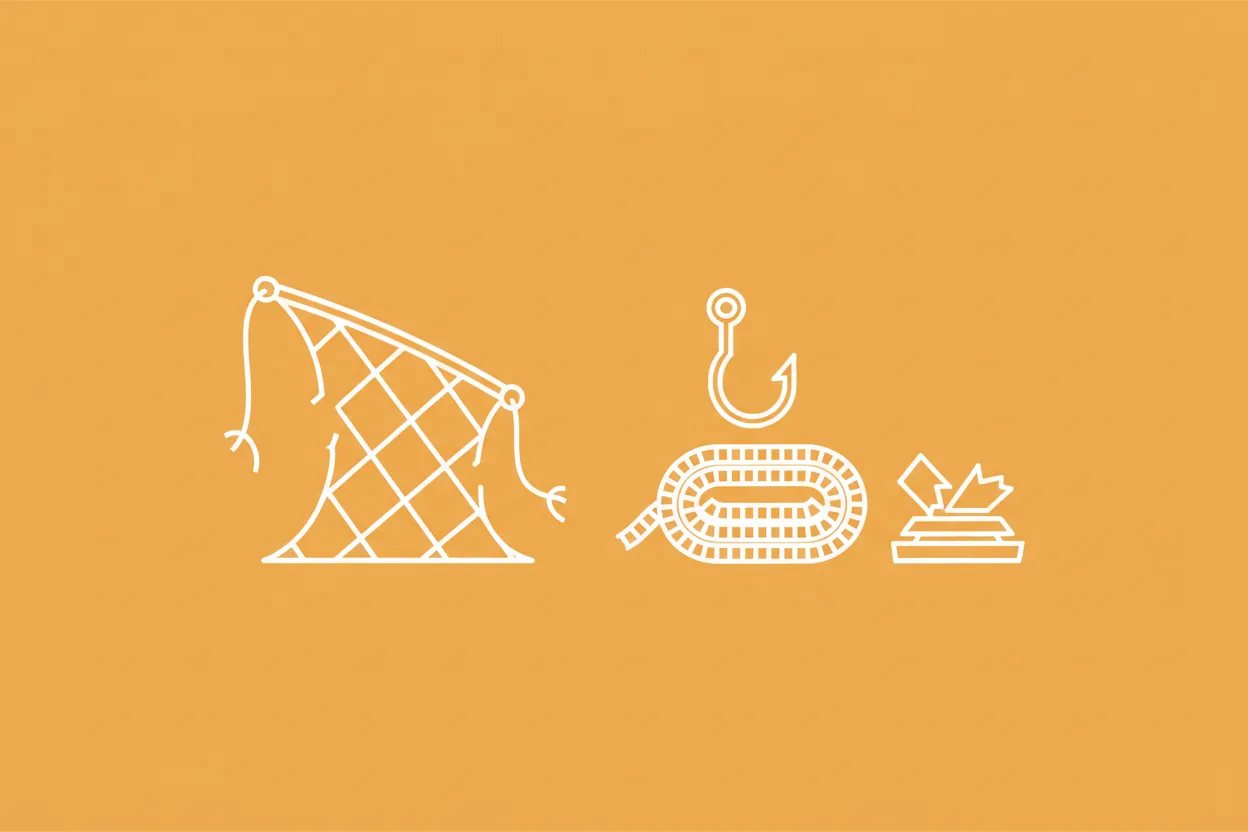
Think about a pile of old fishing nets, ropes, and hooks no longer useful to fishermen. These items can be carefully taken apart through fishing gear dismantling so their materials can be reused or recycled instead of harming the environment.
When fishing gear breaks or becomes unwanted, dismantling separates plastics, metals, and other parts to keep them out of oceans and landfills. For example, cutting nets and removing metal hooks makes recycling easier and stops harmful waste from polluting marine life.
Picture coastal workers collecting damaged gear, then sorting and cleaning it to turn waste into new products like carpets or clothes. Fishing gear dismantling supports a circular economy by keeping materials in use and protecting ocean health for future generations.
Definition: fishing gear dismantling
Fishing gear dismantling is the process of taking apart old or unwanted fishing equipment to separate its materials for reuse, recycling, or safe disposal. It involves cutting nets, removing metal parts, and untangling ropes to prevent environmental harm from plastics and metals left in oceans or landfills.
Fishing gear dismantling separates materials like plastics and metals for recycling or disposal. It takes apart old fishing equipment to reduce environmental damage.
For example, when a fisherman has torn nets and rusty hooks, dismantling means cutting the nets into smaller pieces and removing metal hooks separately. This makes it easier to recycle the plastic nets into new products and melt down the metal for other uses, keeping harmful waste out of the ocean.
Clearing up myths about fishing gear recycling and disposal
Have you ever wondered why recycling fishing gear isn’t as easy as recycling your plastic bottles? The process involves sorting different materials like plastics, metals, and rubber, which makes dismantling fishing gear tricky and costly. Limited recycling spots at ports also add to the challenge.
Many people don’t realize how often fishing gear is lost in the ocean. Studies show that a significant percentage of nets, traps, and lines go missing yearly, contributing to marine pollution. This lost gear can harm aquatic life and ecosystems if not properly managed.
Some think fishers don’t care about the damage caused by lost gear, but many are aware and actively collect waste they find while fishing. They understand the impact on the environment and want to be part of the solution.
Regulations are important, but they aren’t enough on their own. Practical support like disposal centers and incentives for fishers are needed to make a real difference in reducing fishing gear pollution.
7 examples on how to handle old fishing equipment
Here are several ways to break down and manage worn-out fishing gear for better reuse and recycling:
- Net shredding: This involves cutting fishing nets into small pieces to separate materials. It helps in recovering valuable fibers for recycling.
- Line sorting: Fishing lines are sorted by type, such as nylon or monofilament, to improve recycling quality. Proper sorting prevents contamination in recycling streams.
- Metal extraction: Hooks, weights, and other metal parts are removed and collected separately. These metals can be melted down and reused.
- Plastic component removal: Buoys and floats made of plastic are detached from gear. This allows plastics to be recycled more efficiently.
- Biodegradable material separation: Some gear parts made from natural fibers are isolated to compost or biodegrade naturally. This reduces landfill waste.
- Chemical treatment: Certain fishing gear materials undergo chemical processes to break them down safely for reuse. This can turn waste into raw materials.
- Packaging reuse: Containers and wrappings from fishing gear dismantling are cleaned and reused. This reduces the need for new packaging materials.
While some fishing gear is carefully dismantled for reuse, much of it still ends up in landfills or oceans. Improving these practices can significantly reduce environmental harm and promote circular use of materials.
Terms related to managing discarded fishing equipment
Discarded fishing equipment is a major source of marine pollution but can be managed to support a circular economy and reduce environmental harm.
- Ghost nets: Lost or abandoned fishing nets that continue to trap marine life, causing harm and pollution.
- Marine debris: Waste materials, including fishing gear, that accumulate in oceans and affect ecosystems.
- Circular economy: A system where materials are reused and recycled to minimize waste and resource use.
- Gear recovery: The process of collecting lost or discarded fishing equipment from water bodies.
- Material sorting: Separating different types of materials (plastic, metal, etc.) for proper recycling or reuse.
- Resource recovery: Extracting valuable materials from used or discarded fishing gear to be reused.
- Sustainable fishing: Practices that reduce environmental impact and promote long-term health of marine life.
- Pollution prevention: Actions taken to stop waste from entering the ocean and harming marine ecosystems.
- Industrial dismantling: Breaking down fishing gear into components for easier recycling or disposal.
- Waste segregation: Organizing waste by type to improve recycling efficiency and reduce landfill use.
Frequently asked questions on fishing gear dismantling
Learn how dismantling fishing gear helps protect oceans and supports sustainability.
How does fishing gear dismantling reduce marine pollution?
Dismantling fishing gear properly keeps old nets and lines from polluting oceans, preventing harm to sea life. It stops gear from breaking into tiny plastics that fish and birds can mistake for food.
What role does fishing gear dismantling play in the circular economy?
Dismantling fishing gear lets us recover valuable materials like plastic and metal. These materials can be recycled and turned into new products, reducing waste and saving resources.
How are materials sorted and separated during fishing gear dismantling?
Workers separate different parts of the gear—like ropes, nets, and metal hooks—so each can be recycled correctly. Sorting makes recycling more efficient and helps keep materials clean.
What industrial techniques are used to dismantle fishing gear?
Techniques include cutting, shredding, and cleaning gear pieces to prepare them for recycling. These methods ensure that materials are processed safely and efficiently.
How does dismantling fishing gear support sustainable fishing practices?
By recycling old gear, fishermen reduce the need for new materials, lowering environmental impact. It also helps prevent lost gear from causing accidents or trapping marine animals.
How is resource recovery achieved from dismantled fishing gear?
Recovered materials like nylon from nets or metal from hooks are cleaned and processed into raw materials. These can be sold to manufacturers, closing the loop in resource use.
