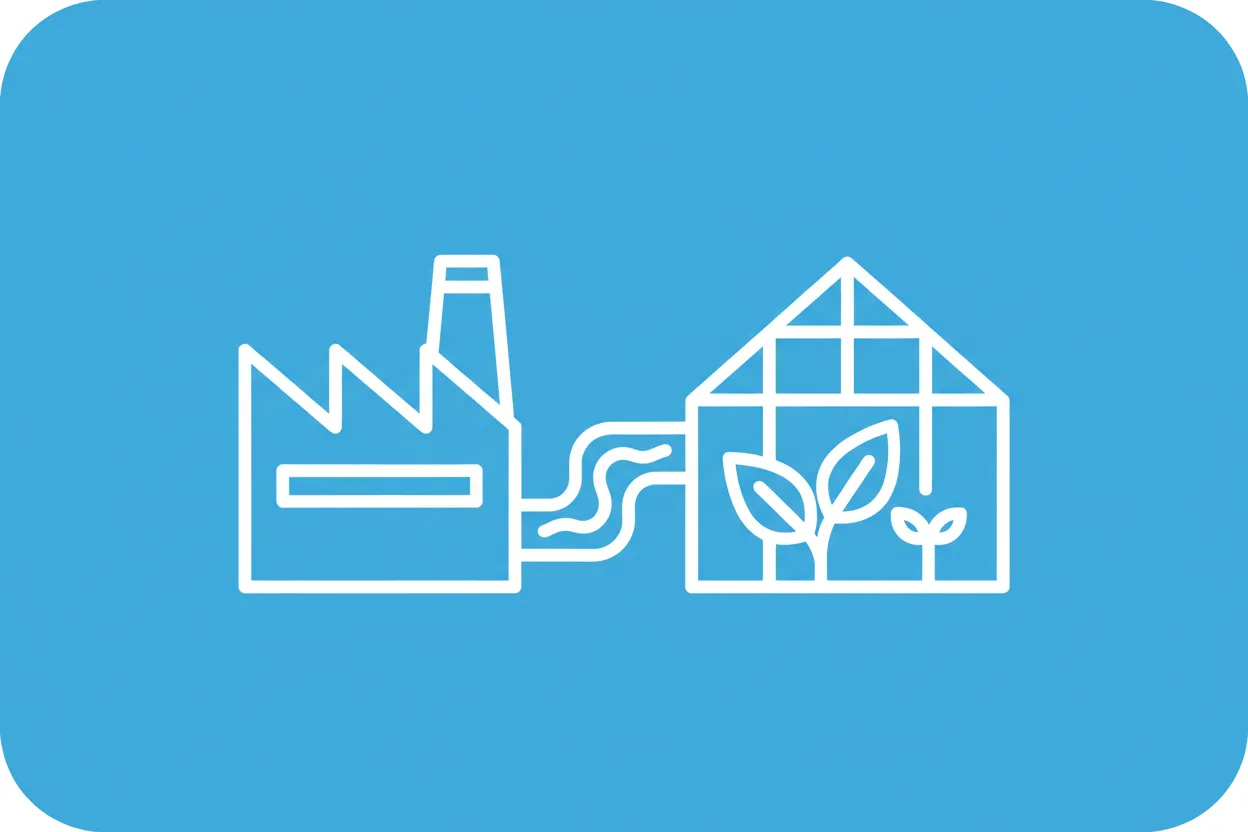
A factory once found its leftover heat was warming a nearby greenhouse, helping plants grow while saving energy costs. This clever teamwork shows how industrial symbiosis lets industries share resources instead of wasting them.
Think of a neighborhood where neighbors swap tools, meals, or rides—industrial symbiosis does the same but with factories. By turning one company’s waste into another’s resource, it cuts pollution, saves money, and keeps materials moving in a circle.
When companies share heat, water, or scrap materials like neighbors sharing goods, they create a community that cares for the environment and boosts business success. This system helps industries work smarter and greener, benefiting everyone involved.
Definition: industrial symbiosis
Industrial symbiosis is a system where different industries collaborate to use each other’s waste or by-products as resources. This teamwork helps reduce pollution, save money, and keep materials flowing so nothing useful is wasted.
Industrial symbiosis encourages companies to share resources like waste and energy. It is a system where industries turn each other’s by-products into useful materials.
For example, in a business park, one factory’s leftover heat might power another’s machines, while scrap metal from one company becomes raw material for another. This sharing cuts waste and lowers costs, making industries work like a community where everything has a purpose.
Clearing up common myths about industrial resource sharing
Have you heard that only big companies can join industrial symbiosis? Many think this way, but small and medium businesses can also team up to share materials, energy, and water. This approach helps reduce waste and boosts efficiency for all sizes of companies.
People often assume industrial symbiosis is just about recycling leftover waste. Actually, it’s much broader. Sharing energy and water between industries creates a circular system that saves resources and cuts costs. Places like Kalundborg in Denmark show how diverse exchanges can benefit everyone involved.
Some worry that starting this kind of collaboration is too complicated. Successful projects in Finland prove it’s doable and rewarding. Connecting industries to use resources smarter not only helps the environment but also improves financial outcomes.
Industrial symbiosis isn’t just good for the planet—it’s also a smart business move. By working together, companies can save money on energy and infrastructure while supporting a healthier economy and environment.
4 examples on sharing resources between industries
Here are some practical ways businesses work together to save materials and reduce waste:
- Waste heat reuse: Factories capture excess heat from one process and use it to warm buildings or power another factory. This reduces energy waste and cuts costs.
- Byproduct exchange: One company's leftover materials become raw ingredients for another, turning what would be trash into useful products. It lowers the need for virgin resources.
- Water recycling: Industrial sites share and treat water, so it can be reused instead of dumped. This conserves freshwater and prevents pollution.
- Packaging return systems: Companies collaborate to collect and clean packaging for reuse, reducing single-use waste and supporting a circular economy.
Some industries still handle waste alone, missing chances to cut costs and protect the environment. Working together unlocks hidden value that benefits everyone.
Terms related to collaborative resource use
Many businesses work together to reduce waste and share resources, creating benefits for the environment and the economy.
| Term | Description |
|---|---|
| Circular Economy | A system focused on reusing materials and reducing waste. |
| Eco-Industrial Parks | Areas where businesses cooperate to use resources efficiently. |
| Resource Efficiency | Using materials and energy in a way that minimizes waste. |
| Cleaner Production | Processes designed to reduce pollution and waste from the start. |
| Life Cycle Assessment | Evaluating the environmental impact of a product from start to finish. |
Frequently asked questions on industrial symbiosis
Industrial symbiosis helps businesses work together to reduce waste and share resources for a greener future. Here are some common questions about how it fits into sustainability.
What is industrial symbiosis in the context of circular economy?
Industrial symbiosis is a key part of the circular economy, where companies exchange by-products and waste to keep materials in use longer, minimizing resource extraction and waste generation.
How do eco-industrial parks support industrial symbiosis?
Eco-industrial parks group businesses close together so they can easily share energy, water, and materials, turning waste from one company into input for another, boosting resource efficiency.
Why is resource efficiency important in industrial symbiosis?
Resource efficiency means using materials and energy wisely. Industrial symbiosis improves this by turning waste into valuable resources, saving money and reducing environmental harm.
How does industrial symbiosis improve waste management?
By linking industries, waste from one process can become raw material for another, reducing landfill use and pollution while promoting recycling and reuse within the system.
What role does life cycle assessment play in industrial symbiosis?
Life cycle assessment helps measure the environmental impacts of products or processes from start to finish, guiding businesses in industrial symbiosis to make greener choices and improve sustainability.
How can sustainable supply chains benefit from industrial symbiosis?
Industrial symbiosis strengthens sustainable supply chains by encouraging local resource sharing, reducing transportation emissions, and promoting circular material flows, making the supply chain more resilient.
