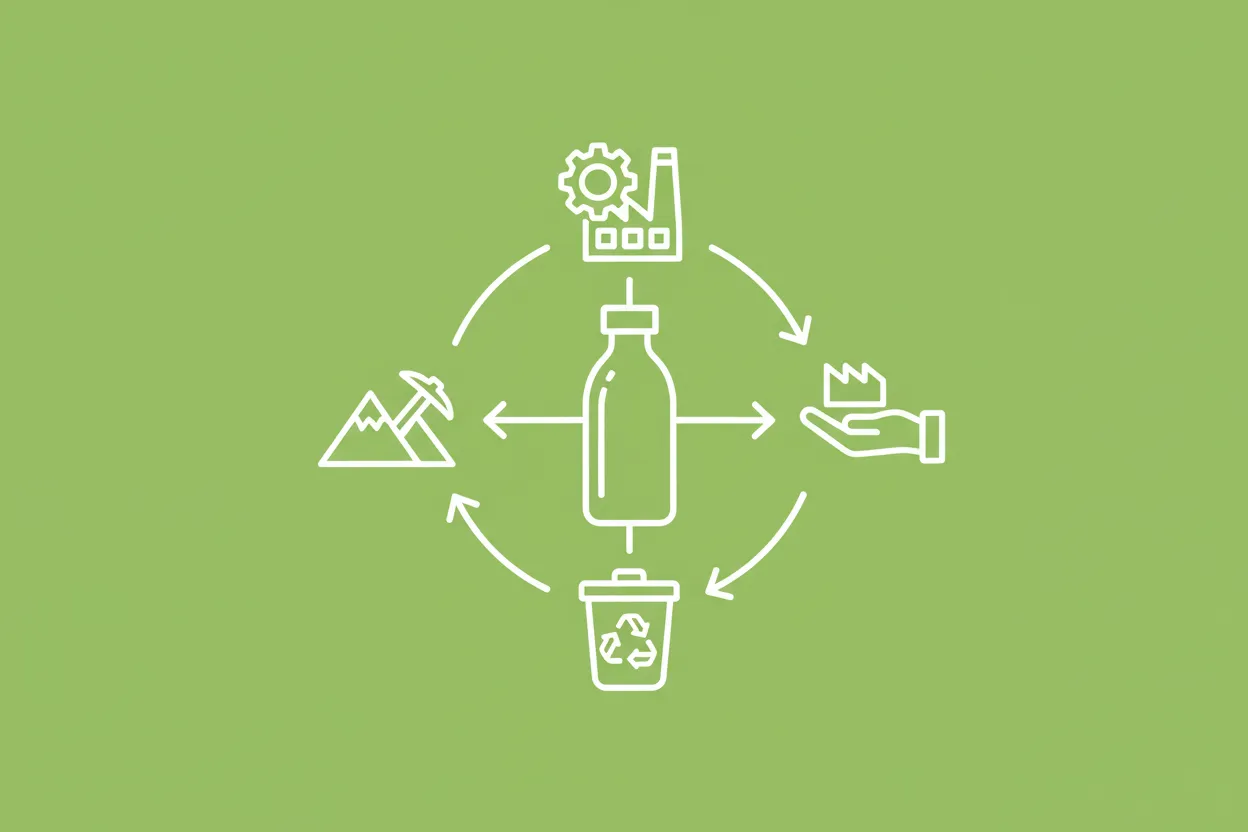
Think about a company wanting to know how its product affects the environment from the moment raw materials are gathered until the product is thrown away—that’s where ISO 14040 (LCA Framework) comes in. It offers a clear, step-by-step way to check the full environmental impact of a product or service.
Say a business plans to improve the sustainability of its packaging. Using ISO 14040, it can measure energy use, waste, and pollution throughout the package’s life cycle to find the best improvements. This helps make smarter choices that reduce waste and support a circular economy.
Definition: ISO 14040 (LCA Framework)
ISO 14040 is a standard that guides how to carry out a Life Cycle Assessment (LCA). An LCA checks the environmental impact of a product or service from raw materials to disposal. It follows clear steps to collect and analyze data, helping companies and people make greener, more informed choices.
ISO 14040 guides how to carry out a Life Cycle Assessment. It checks the environmental impact of a product or service from start to finish.
For example, a company might use ISO 14040 to study the energy used by a smartphone during its entire life. This helps them find ways to reduce pollution and save resources, like using recycled materials or changing packaging to be more eco-friendly.
How has the ISO 14040 framework for life cycle assessment advanced over time?
What changes have shaped the way environmental impact is assessed through ISO 14040? This standard has steadily evolved since its start in 1997, adapting to new scientific knowledge and sustainability needs. Each update aimed to make life cycle assessment (LCA) clearer and more useful.
The key revision in 2006 brought a more user-friendly approach, aligning ISO 14040 with ISO 14044 to create a consistent set of rules. This helped companies and organizations better understand and apply LCA in their sustainability efforts. The 2020 amendment further improved the standard by integrating new environmental concerns and updated methodologies.
Why does this matter? Improved standards mean more accurate assessments, leading to smarter decisions that support circular economy goals and reduce waste. The ISO 14040 continues to be a vital tool for those committed to environmental responsibility.
In short, the ongoing refinement of ISO 14040 shows a strong commitment to enhancing life cycle assessment. This makes it easier to measure and improve the sustainability of products and processes.
7 examples on life cycle thinking in environmental management
Here are some examples of how life cycle thinking helps companies and communities reduce waste and improve sustainability:
- Product design: Using life cycle thinking, designers choose materials and processes that lower environmental impact from start to finish. This helps reduce waste and supports circularity.
- Packaging optimization: Companies assess packaging options to minimize material use and improve recyclability, cutting down on packaging waste and boosting recycling rates.
- Energy use analysis: Life cycle thinking evaluates energy consumed at every stage, encouraging shifts to renewable sources and more efficient manufacturing.
- Waste management planning: This approach identifies points where waste can be reduced or reused, creating better systems for collection and recycling.
- Supply chain management: Examining the entire supply chain reveals opportunities to reduce emissions and waste, improving overall sustainability.
- Consumer behavior influence: Life cycle insights guide education campaigns that encourage responsible use, reuse, and recycling of products.
- Policy development: Regulators use life cycle data to create rules that promote circular economy practices like extended producer responsibility.
Some efforts focus only on recycling and miss bigger chances to reduce waste early on. Others look too narrowly at one product stage instead of the whole life cycle. Life cycle thinking brings all steps together for clearer, smarter decisions.
Terms related to life cycle assessment and environmental standards
Many standards work together to support environmental management and sustainability efforts across industries.
- Life Cycle Assessment requirements (ISO 14044): Guidelines detailing how to conduct and report a life cycle assessment to measure environmental impacts accurately.
- Environmental management systems (ISO 14001): A framework helping organizations manage their environmental responsibilities systematically.
- Environmental labels and declarations (ISO 14020): Principles guiding the creation of labels that communicate environmental information to consumers.
- Type III environmental declarations (ISO 14025): Detailed, verified environmental data about products, helping buyers make informed choices.
- Energy management systems (ISO 50001): Standards that assist organizations in improving energy efficiency and reducing environmental impact.
Frequently asked questions about ISO 14040 (LCA framework)
Here are some common questions about ISO 14040 and related environmental standards.
What is ISO 14044, and how does it relate to ISO 14040?
ISO 14044 sets the detailed requirements and guidelines for conducting Life Cycle Assessments (LCAs). It works hand-in-hand with ISO 14040, which provides the overall framework for LCA, making sure assessments are consistent and reliable.
How does ISO 14001 differ from ISO 14040?
ISO 14001 focuses on environmental management systems to help organizations reduce their overall environmental impact. ISO 14040, on the other hand, is specifically about assessing the life cycle impacts of products or services.
What does ISO 14020 cover?
ISO 14020 defines the general principles for environmental labels and declarations. It helps ensure that eco-labels are truthful, transparent, and not misleading, supporting better consumer choices.
Can you explain ISO 14025?
ISO 14025 deals with Type III environmental declarations, which provide detailed, verified environmental data about products. This supports transparency and helps companies and consumers make more sustainable decisions.
What is the purpose of ISO 14063?
ISO 14063 guides organizations on how to communicate their environmental efforts clearly and effectively. It helps build trust and encourages engagement around sustainability initiatives.
How does ISO 50001 support sustainability?
ISO 50001 focuses on energy management systems, helping organizations use energy more efficiently. This reduces costs and environmental impact, aligning with broader sustainability and circular economy goals.
