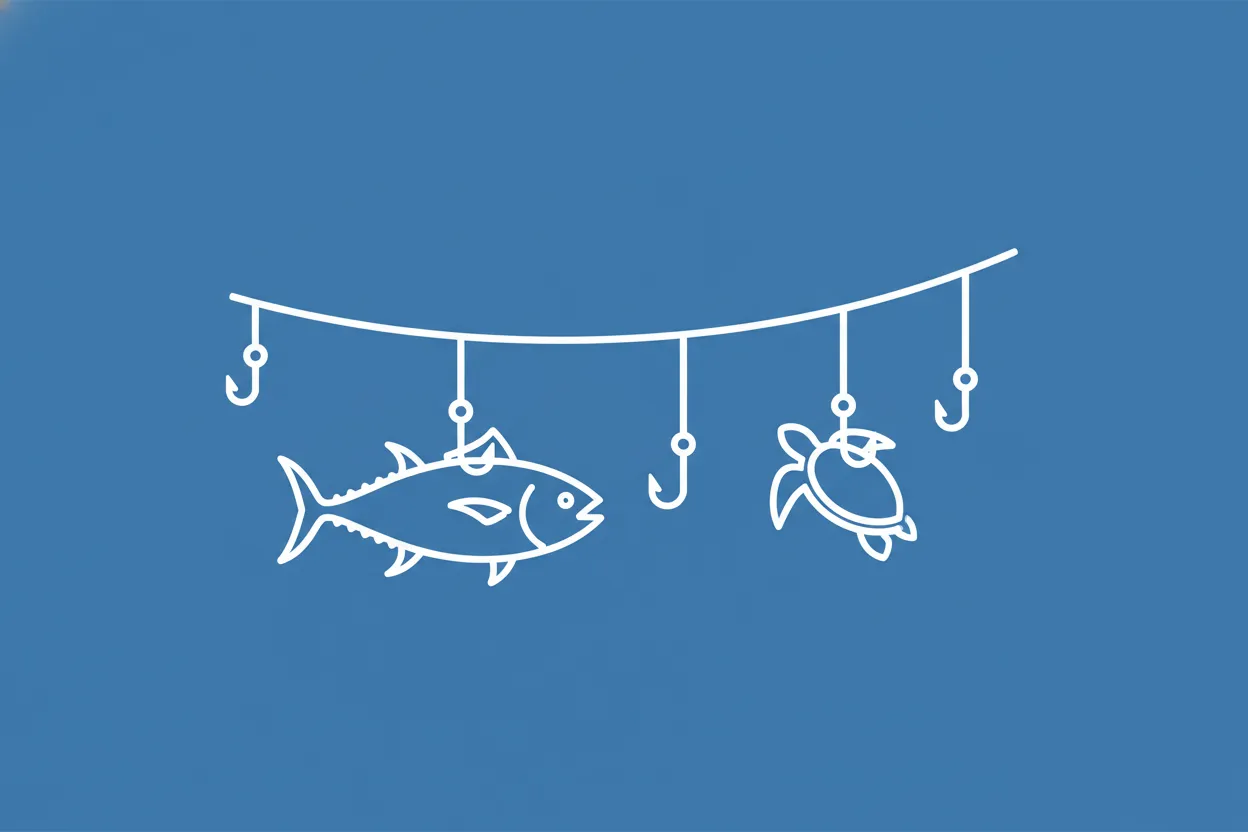
Fishing in the ocean can sometimes catch more than just the fish people want, creating problems for marine life and the environment. One big challenge is how to catch enough fish to meet demand without harming other creatures or emptying the sea of key species. This is where longline fishing comes in.
Longline fishing uses a very long main line with many shorter lines and baited hooks to catch fish like tuna and swordfish efficiently. However, bycatch—catching unintended animals like turtles, seabirds, and sharks—can hurt ocean health. Finding ways to reduce this bycatch is key to keeping fishing sustainable.
Overfishing is another concern, where too many fish are taken from the ocean, threatening future supplies. Rules and better fishing practices help balance catching fish today while protecting the ocean for tomorrow. Longline fishing, when done responsibly, can be part of a sustainable seafood future.
Definition: longline (fishing)
Longline fishing is a way to catch fish using a very long main line with many shorter branch lines, each holding a baited hook. This method targets species like tuna and swordfish by spreading hooks over large ocean areas to catch many fish at once.
Longline fishing uses many baited hooks attached to a long main line. This method targets ocean fish like tuna and swordfish by covering large water areas.
Think of it like a clothesline with lots of clothespins, but instead of clothes, there are hooks baited to catch fish. This lets fishermen catch many fish in one go without needing many boats or crews.
The history behind longline fishing techniques
Have you ever wondered how longline fishing came to be? This fishing style uses a main line with many baited hooks to catch fish. It has roots stretching back thousands of years across different cultures.
Centuries ago, ancient peoples like the Phoenicians and Egyptians used similar methods in the Mediterranean Sea. They called it "volantín" or "three hook line," setting multiple hooks on one long line to increase their catch. Over time, Europeans refined this idea, with names and techniques evolving from southern Italy, Greece, and Catalonia. By the 15th century, anchored longlines were common near coasts, while drifting longlines allowed fishing farther out at sea.
The method kept changing, adapting to new needs and places. For example, Japanese immigrants brought longline fishing to Hawaii in 1917, where it was known as "flagline" fishing because of the flags marking the hooked lines. This helped grow Hawaii’s tuna industry and showed how ideas travel and transform.
Longline fishing is now practiced worldwide, catching important species like tuna and swordfish. Its long history highlights human creativity in sustainable fishing practices.
4 examples on the impact of large-scale fishing gear
Here are some ways large fishing gear affects marine life and ecosystems:
- Bycatch: Non-target species like turtles and seabirds often get caught unintentionally. This highlights the challenge of reducing waste and harm in fishing.
- Ghost fishing: Lost or abandoned gear continues trapping marine animals, causing ongoing environmental damage. This waste contributes to ocean pollution and harms biodiversity.
- Habitat damage: Heavy gear can disrupt seabed habitats, affecting the plants and animals that live there. This reduces the ocean’s natural ability to regenerate and support life.
- Resource depletion: Large-scale fishing can rapidly reduce fish populations, making it harder for ecosystems to stay balanced. This shows why sustainable practices are essential.
While some fishing methods cause severe environmental impacts, others focus on sustainability and waste reduction to protect marine ecosystems. This contrast shows the importance of thoughtful design and responsibility in fishing practices.
Terms related to longline fishing
This method of fishing can impact marine ecosystems and requires careful management to reduce bycatch and support sustainability.
| Term | Description |
|---|---|
| Bycatch | Unintended catch of non-target species, which can harm marine biodiversity if not controlled. |
| Ghost fishing | Lost or discarded fishing gear that continues to catch marine life, causing pollution. |
| Selective gear | Fishing equipment designed to catch specific species, minimizing harm to others. |
| Quota | Limits set on the amount of fish that can be caught to prevent overfishing and protect stocks. |
| Marine protected areas | Zones where fishing is restricted or banned to allow ecosystems to recover and thrive. |
| Ecosystem-based management | Approach that considers entire ecosystems in fishery policies to balance use and conservation. |
| Trawl | A fishing method that can damage the ocean floor and increase bycatch, often regulated. |
| Sustainable certification | Labels that indicate fishery products meet environmental and social standards. |
| Discard ban | Regulations that require fishermen to keep and report all catches, reducing waste and harm. |
Frequently asked questions on longline fishing
Longline fishing is a common commercial method with impacts and benefits worth knowing about.
What are sustainable fishing practices in longline fishing?
Sustainable practices mean catching fish without harming the ocean’s ability to keep producing fish. Longline fishers use techniques like setting lines deeper or at specific times to avoid overfishing and protect vulnerable species.
How does longline fishing affect bycatch?
Bycatch is the accidental catch of unwanted species like turtles or seabirds. Longline fishing can reduce bycatch by using special hooks or bird-scaring lines, helping protect marine wildlife while still catching target fish.
What impact does longline fishing have on marine ecosystems?
Longline fishing can disturb ecosystems if done carelessly, but responsible fishers minimize damage by avoiding sensitive habitats and reducing waste. This helps maintain the balance of ocean life and supports healthy fish populations.
How is fishery management applied to longline fishing?
Fishery management sets rules like catch limits, seasons, and gear types to keep fish populations healthy. These regulations guide longline fishing practices to ensure fishing is done responsibly and fish stocks remain sustainable.
What role does longline fishing play in ocean conservation?
When managed well, longline fishing supports ocean conservation by providing jobs and food without depleting resources. It encourages fishers to protect the ocean through better practices and participation in conservation programs.
