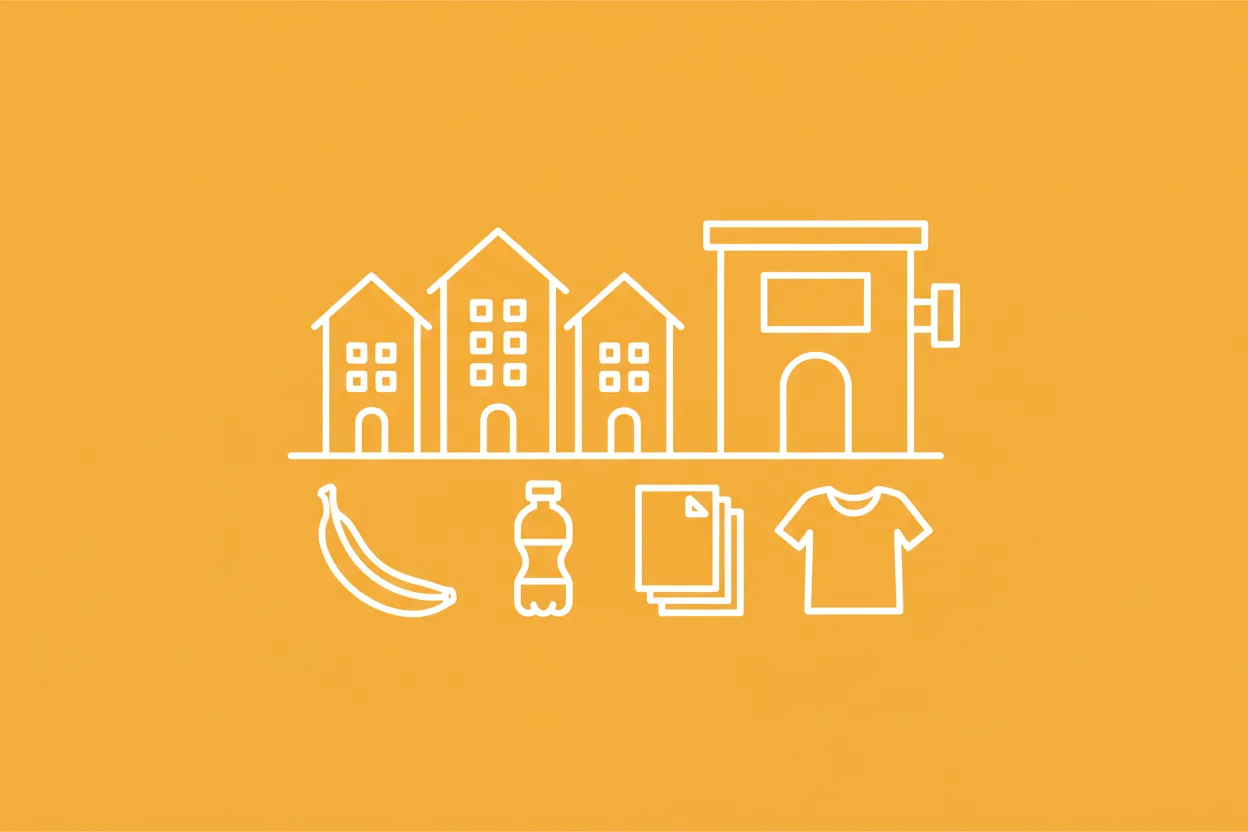
Every day, towns and cities generate a lot of trash from places like homes and shops. Municipal Solid Waste (MSW) is the term for this everyday garbage, including things like food scraps, plastic bottles, paper, and old clothes.
Handling this waste well is crucial because it keeps our neighborhoods clean and protects the environment from pollution. When waste is sorted and recycled, we save natural resources and cut down on harmful gases that hurt the planet.
Definition: MSW (Municipal Solid Waste)
MSW means the everyday trash people throw away in cities, like food scraps, paper, plastics, glass, metals, and old clothes. It comes from homes, schools, shops, and offices. Managing MSW well helps keep the environment clean and reduces pollution.
Proper MSW management helps keep the environment clean and reduces pollution. It means handling everyday trash from homes and businesses.
Think about the trash you put in your bin at home—food leftovers, used paper, or empty bottles. That’s MSW. When you separate recyclables or compost food scraps, you’re helping manage MSW in a way that protects nature and keeps your community cleaner.
Clearing up myths about everyday waste and recycling
Have you ever wondered if recycling always saves energy or if landfills are truly the cheapest way to deal with trash? Many common ideas about the waste we produce daily don’t tell the full story. Sorting fact from fiction can help us all make better choices for the planet.
Some think burning waste doesn’t harm the climate, but incineration releases greenhouse gases and pollutants. Others believe all packaging is bad, yet materials like glass and metal can be recycled endlessly. It’s also a myth that everything can be recycled—contaminated or hazardous items often can’t be processed safely. Composting, which turns food scraps into rich soil, is sometimes seen as smelly, but when done right, it’s odor-free and hygienic.
Waste management is not just up to local governments; businesses and individuals each play a vital role. And while zero waste might seem impossible, small everyday changes can add up to big environmental wins.
Knowing the truths behind these misconceptions empowers us all to support better recycling, reduce waste, and promote sustainability.
6 examples on everyday waste management challenges
Here are some common types of waste that cities handle regularly, showing the variety and complexity involved:
- Food waste: This includes scraps from kitchens and restaurants. It’s a major part of waste and can be composted to reduce landfill use.
- Plastic packaging: Single-use plastic bags and containers are common. Their recycling rates are often low, leading to environmental pollution.
- Paper and cardboard: Newspapers, boxes, and office paper make up a large share of waste. These materials are highly recyclable when kept clean and dry.
- Glass bottles and jars: Glass is 100% recyclable without losing quality, but broken glass can complicate the recycling process.
- Electronic waste: Old phones and appliances. These contain valuable materials but also hazardous substances requiring special handling.
- Textiles: Discarded clothes and fabrics. Many end up in landfills despite potential for reuse or recycling.
While some waste types are easier to recycle, others need more careful treatment or innovative solutions. This contrast highlights the importance of tailored waste strategies.
Terms related to common waste materials and handling
Cities generate millions of tons of waste each year, making proper handling essential for sustainability.
| Term | Description |
|---|---|
| Waste management | The collection, transport, processing, and disposal of waste materials. |
| Recycling | The process of converting waste into reusable materials to reduce resource use. |
| Waste segregation | Sorting waste into categories to improve recycling and disposal efficiency. |
| Composting | Turning organic waste like food scraps into nutrient-rich soil for gardening. |
| Landfilling | Burying waste in designated areas, the most common disposal method globally. |
Frequently asked questions on municipal solid waste (MSW)
Here are some common questions people have about managing everyday trash and how it affects our environment.
What is waste segregation, and why is it important?
Waste segregation (or separate collection) means sorting your trash into groups like recyclables, organic waste, and landfill waste. This makes recycling and composting easier, reducing pollution and helping materials get reused instead of wasted.
How does recycling help reduce municipal solid waste?
Recycling turns used materials like paper, plastic, and metal into new products. This saves resources, cuts down on landfill use, and lowers pollution, supporting a circular economy where materials keep flowing instead of piling up as waste.
What role does composting play in waste management?
Composting breaks down food scraps and yard waste into nutrient-rich soil. It keeps organic waste out of landfills, reduces greenhouse gas emissions, and supports healthy soil, making it a natural way to recycle nutrients back into the environment.
Why is landfilling still used, and what are its impacts?
Landfilling means burying waste underground. It’s a common method to manage trash that can’t be recycled or composted. While necessary, landfills can produce harmful gases and take up space, so reducing waste and improving recycling helps lessen landfill use.
How does waste-to-energy technology work with MSW?
Waste-to-energy plants burn trash to produce electricity or heat. This reduces landfill volume and recovers energy from waste. It’s a way to manage non-recyclable waste while generating power, but it works best alongside strong recycling and reduction efforts.
What is hazardous waste, and how should it be handled?
Hazardous waste includes toxic or dangerous materials like batteries, chemicals, and electronics. These need special collection and treatment to prevent harm to people and the environment. Proper disposal is crucial to avoid pollution.
How does sustainable materials management relate to MSW?
Sustainable materials management looks at the entire life of a product—from design to disposal—to minimize waste and environmental impact. It encourages using durable, recyclable materials and supports practices like extended producer responsibility to keep materials in use longer.
