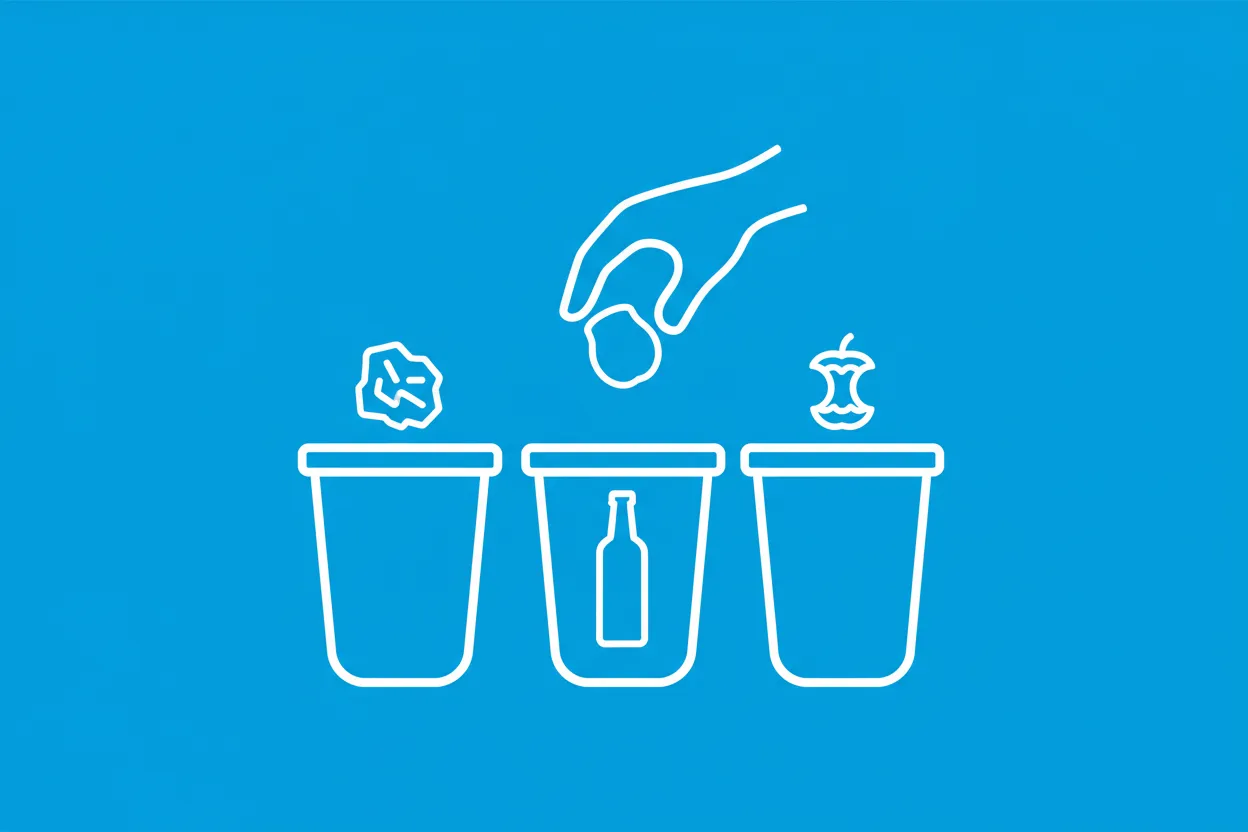
Sorting waste right where it’s made, like at home or work, makes recycling and composting much easier and more effective. When materials like paper, plastic, glass, and food scraps are separated early, they stay cleaner and more valuable for recycling plants. This simple habit helps reduce pollution, save energy, and protect natural resources for a healthier planet.
Definition: source sorting
Source sorting is the process of separating waste into different categories like paper, plastic, glass, and food scraps right where it is created, such as at home or work. This keeps materials clean and easier to recycle or compost.
Source sorting keeps materials clean and easier to recycle or compost. It is the process of separating waste into different categories right where it is created.
For example, when you throw your plastic bottle in the recycling bin instead of the trash, you’re practicing source sorting. This small step helps recycling centers handle materials efficiently and turns waste into new products.
Tracing the evolution of waste separation at its source
Have you ever thought about where the idea of sorting waste began? Long before modern recycling, ancient communities practiced early forms of waste separation and reuse. These early steps laid the groundwork for today's sustainable waste management methods.
Centuries ago, places like Knossos and ancient China developed simple landfill and composting systems, showing respect for natural cycles. Later, cities such as Athens and Rome introduced rules to keep waste away from living areas, protecting public health. The Romans even reused broken materials creatively, hinting at circular economy ideas.
Fast forward to the 20th century, Europe sparked new momentum with programs encouraging producers to take responsibility for packaging waste. This shift promoted designing products that are easier to recycle and supported the growth of recycling infrastructure.
Today, source sorting is central to reducing waste’s environmental impact. It’s a key step toward a cleaner, more circular future that benefits everyone.
5 examples on how to separate materials for better recycling
Proper separation of items helps keep materials clean and ready for recycling. Here are some practical ways people sort waste to improve recycling quality:
- Glass bottles: Rinsing and placing only glass containers in a separate bin prevents contamination and makes recycling more efficient.
- Paper and cardboard: Flattening boxes and keeping paper dry ensures these fibers can be reused properly without mixing with food waste.
- Plastic containers: Sorting plastics by type, like PET or HDPE, helps recycling plants process them correctly and avoid mixed plastic batches.
- Metal cans: Cleaning and grouping aluminum or steel cans keeps them valuable for recycling, reducing the need for mining new metals.
- Food scraps: Collecting organic waste in a separate bin allows it to be composted instead of sent to landfill, turning it into useful soil nutrients.
Sometimes, people mix all waste together for convenience, but this makes recycling harder and less effective. Separating materials at the source creates clearer streams that recycling centers can handle more easily.
Terms related to how we organize waste at home or work
Sorting waste properly can greatly improve recycling rates and reduce contamination in materials.
- Waste segregation: Separating different types of waste to make recycling and disposal easier.
- Material recovery: The process of extracting useful materials from waste for reuse.
- Composting: Turning organic waste like food scraps into nutrient-rich soil.
- Recycling: Converting waste materials into new products to save resources.
- Resource efficiency: Using materials in a way that reduces waste and maximizes reuse.
- Urban waste collection: Systems for gathering waste from cities to manage it properly.
- Environmental sustainability: Practices that reduce harm to the environment while conserving resources.
Frequently asked questions on source sorting
Source sorting helps separate waste at home or work, making recycling and composting easier and more effective.
What is waste segregation and why is it important?
Waste segregation means separating trash into groups like recyclables, compostables, and landfill waste. It helps ensure materials are properly recycled or composted, reducing pollution and saving resources.
How does source sorting improve recycling?
When you sort waste correctly, recyclers get cleaner materials that are easier to process. This boosts recycling rates and quality, helping turn waste back into useful products more efficiently.
What role does source sorting play in circular economy?
Source sorting supports the circular economy by keeping materials clean and reusable. It prevents waste from ending up in landfills and promotes turning products back into raw materials for new uses.
Can source sorting help with composting?
Yes! Sorting out food scraps and yard waste separately allows these organic materials to be composted. Composting turns waste into nutrient-rich soil instead of pollution, closing the loop on organic waste.
How does source sorting contribute to resource efficiency?
By separating waste, valuable materials like metals, plastics, and paper can be recovered and reused. This reduces the need for new raw materials, saving energy and protecting natural resources.
What impact does source sorting have on urban waste collection?
Source sorting makes urban waste collection more organized and less costly. It reduces contamination in recyclables and compostables, making collection systems cleaner and more effective in managing city waste.
