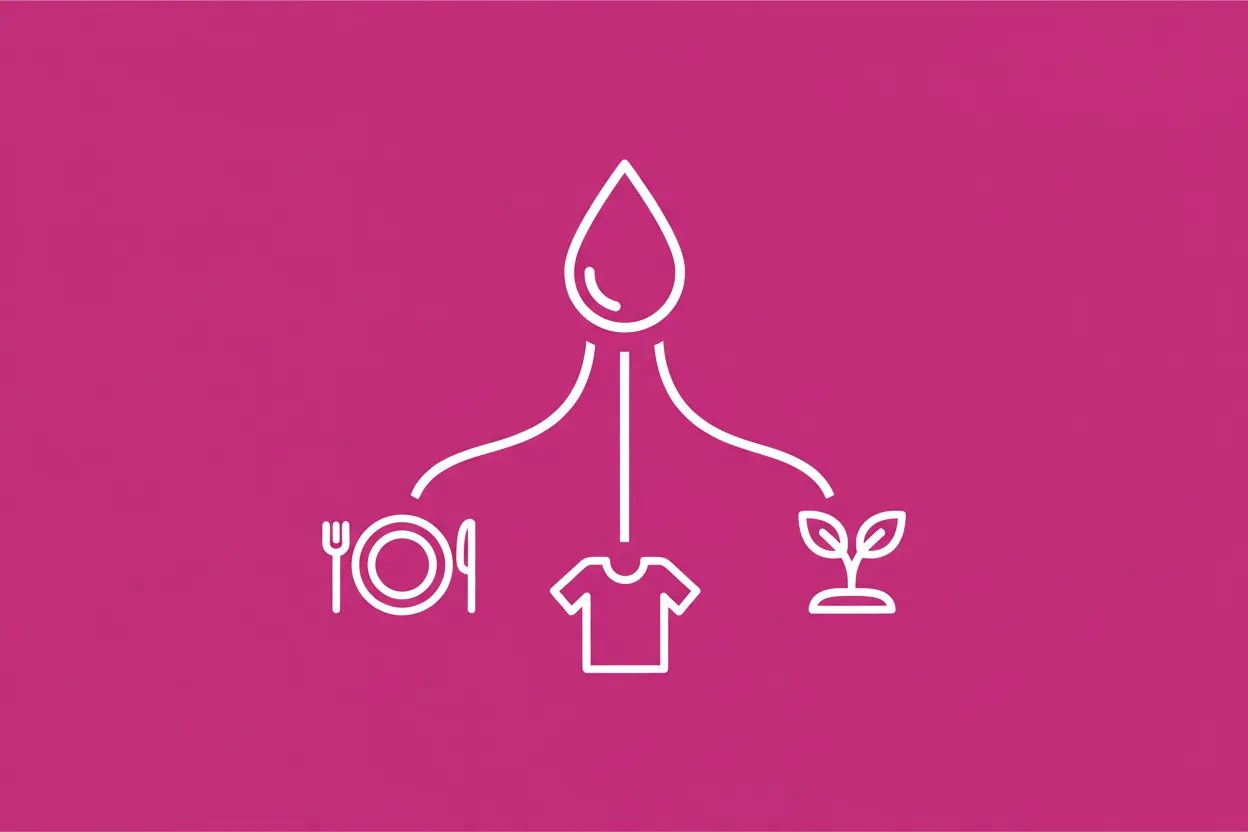
Think about the last time you drank a glass of water or wore your favorite t-shirt. What if I told you that much more water was used behind the scenes to make that possible? That’s where the water footprint comes in—it measures the total freshwater used directly and indirectly in making the things we use every day.
A family dinner might seem simple, but the steak on the plate tells a bigger story. It includes water the animal drank, rainwater for its feed, and water polluted during farming. This example shows how water footprint reveals the hidden water behind products, helping us see our real impact.
By knowing our water footprint, we can choose wisely—like eating more vegetables or fixing leaks at home—to save water. Small changes add up and help protect water for people, plants, and animals everywhere. How would you like to reduce your water footprint today?
Definition: water footprint
Water footprint measures the total freshwater used directly and indirectly in our daily lives. It includes all the water needed to produce things we consume, like food, clothes, and energy, helping us see how our choices affect water resources.
Water footprint shows how our choices affect water resources. It measures the total freshwater used directly and indirectly in daily life.
For example, eating a steak involves water the animal drank, rainwater for its feed, and polluted water from farming. This total water use can be much larger than expected, revealing the hidden water behind everyday products.
Tracing the roots of water use measurement
How do we know the true amount of water behind everyday products? This question led to a new way of looking at water consumption beyond just what we see at home. It measures water used directly and hidden in making goods and services.
A Dutch expert named Arjen Hoekstra developed this idea in 2002. He broke down water use into green water (rainwater), blue water (surface and groundwater), and grey water (water needed to clean pollution). This helps us see the full impact of our choices on freshwater resources.
This method isn’t just theory—it’s practical. It’s used worldwide to check water use in farming, factories, and homes. It highlights surprising facts, like how much water goes into producing meat.
Water footprints guide better decisions. They help spot areas at risk from water shortages and encourage smarter water use for a sustainable future.
4 examples on how products affect water use
Here are some everyday items and industries that show the impact of water use in their production:
- Cotton clothing: Producing cotton fabric requires a large amount of water, often thousands of liters per kilogram. This highlights how fashion choices can have hidden water costs.
- Beef production: Raising cattle uses significant water for drinking, feed crops, and processing. It’s one of the most water-intensive foods we consume.
- Smartphones: Manufacturing electronics involves water in mining metals and cooling factories. This shows water use goes beyond just food and clothes.
- Paper products: Making paper depends on water for pulping and processing wood fibers. Recycling paper can greatly reduce this water demand.
Some products use water directly, like farming crops, while others use it in complex supply chains. Seeing the difference helps us think about better ways to save water overall.
Terms related to water impact in sustainability
Water-related challenges affect industries, communities, and ecosystems worldwide.
- Water scarcity: When demand for water exceeds supply, causing stress on resources.
- Virtual water: The hidden water used to produce goods and services.
- Water use efficiency: How well water is used to achieve a desired outcome with minimal waste.
- Water pollution: Contamination of water bodies that harms ecosystems and human health.
- Sustainable water management: Using water in ways that meet today’s needs without harming future supplies.
- Water risk assessment: Evaluating potential water-related risks for businesses or regions.
- Life cycle assessment (LCA): Analyzing environmental impacts, including water use, across a product’s life.
- Circular water economy: Designing systems to reuse and recycle water, reducing waste and demand.
Frequently asked questions on water footprint
Here are answers to common questions about water footprint and how it relates to sustainability.
What is water footprint assessment?
Water footprint assessment measures the total volume of freshwater used to produce goods or services, helping identify where water use can be reduced for better sustainability.
How does water scarcity affect water footprint?
Water scarcity means limited water availability, so reducing water footprint in these areas is crucial to avoid worsening shortages and support local communities.
What is virtual water?
Virtual water is the hidden water used in producing products, like the water needed to grow food, helping us understand the true water impact of what we buy.
How can water use efficiency improve sustainability?
Improving water use efficiency means using less water to achieve the same result, which conserves resources and supports circular water management.
What role does water pollution play in water footprint?
Water pollution reduces the availability of clean water, increasing the water footprint since more water is needed to dilute or treat contaminated sources.
What is sustainable water management?
Sustainable water management ensures water use meets present needs without harming future supply, balancing environmental, social, and economic needs.
How does water risk assessment support circular water economy?
Water risk assessment identifies areas where water scarcity or pollution threaten operations, guiding smarter water reuse and recycling strategies in a circular system.
What is life cycle assessment (LCA) in water footprint?
LCA evaluates water use and impacts across all stages of a product’s life, from raw material to disposal, to improve overall sustainability.
What is a circular water economy?
A circular water economy focuses on reusing and recycling water to minimize waste and reduce reliance on fresh water, promoting long-term sustainability.
