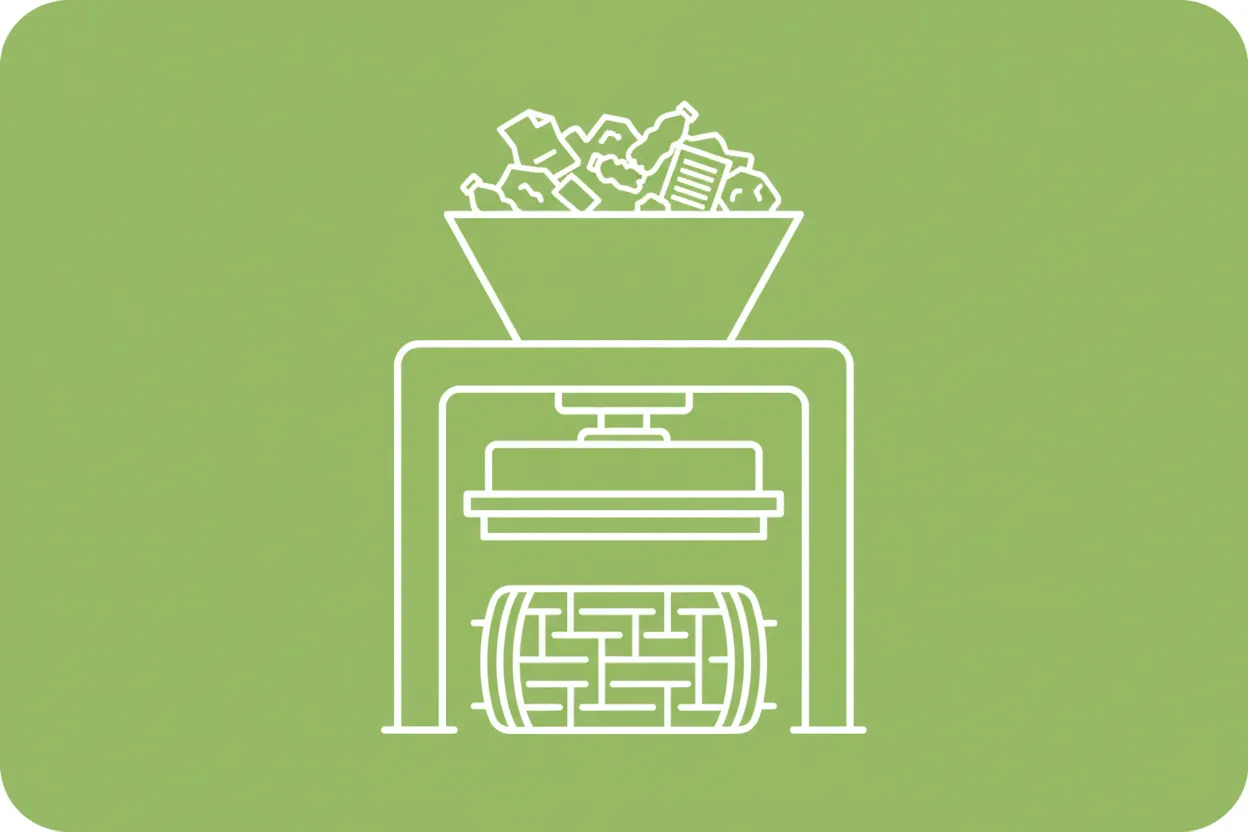
Have you ever wondered how big piles of recyclable materials get neatly packed for easier handling? Baling (recyclable materials) is the process that compresses items like paper, plastic, and metal into tight bundles called bales. Why does making these compact blocks matter so much for recycling and sustainability?
By turning loose recyclables into dense, manageable bales, baling saves space and cuts transportation costs. It helps keep materials cleaner and less damaged, which means they’re more valuable for recycling and support a circular economy. How does this simple step help reduce waste and protect the environment?
Definition: baling (recyclable materials)
Baling is the process of compressing recyclable materials like paper, plastic, or metal into dense bundles called bales. These bales are easier to store, transport, and protect from damage, making recycling more efficient and environmentally friendly.
Baling compresses recyclable materials into dense bundles. This process makes storage, transport, and recycling more efficient.
For example, a recycling center might gather loose cardboard boxes and use a baler to squeeze them into tight, rectangular bales. These bales take up less space in trucks and keep the cardboard clean, so it can be turned into new products faster and with less waste.
How baling shaped recycling practices in Europe
What sparked the need to bundle recyclables tightly? As industries grew, managing increasing waste became a challenge. Early on, simple tools adapted from farming helped compress scrap materials, starting a new chapter in recycling.
Back in the early 1900s, mechanical presses originally meant for hay were repurposed to bale paper, textiles, and metals. This made handling recyclables easier and more organized. The arrival of electromagnets and powerful shears soon helped separate and process metals faster, improving recycling systems.
Over the years, more advanced balers were created, automating the process and making it safer. These machines could handle a wider range of waste types, boosting recycling efficiency. Today, baling is a key step in turning waste into reusable resources.
By compressing materials into compact bundles, baling cuts down on transport costs and supports circular economy goals. It’s a simple method with big benefits for sustainability.
3 examples on how materials are compacted for recycling
Here are some common ways recyclable materials are compressed to make handling and transport easier:
- Vertical balers: These machines press materials like cardboard or plastic into dense blocks using vertical force. This method is space-efficient and ideal for smaller recycling centers.
- Horizontal balers: Using horizontal pressure, these balers produce larger, tightly packed bales well-suited for high-volume materials like paper or metal cans. They often handle bigger loads for industrial recycling.
- Automated baling systems: These combine conveyor belts and balers to streamline the process, increasing efficiency and reducing manual labor. They are common in large-scale recycling facilities aiming for circularity.
While manual compression still exists in some places, automated and machine-driven baling significantly improves recycling rates and waste management by making materials easier to store and ship.
Key terms in recyclable material processing
Recycling involves many steps and tools that help turn waste into new resources, supporting a circular economy and reducing environmental impact.
| Term | Description |
|---|---|
| Compactor | A machine that compresses waste to reduce volume. |
| Material recovery facility (MRF) | A site where recyclables are sorted and prepared for reuse. |
| Sorting conveyor | A belt system that helps separate different materials. |
| Organic waste | Biodegradable material that can be composted. |
| Hauler | A company or vehicle responsible for transporting waste. |
| Shredder | Equipment that cuts materials into smaller pieces. |
| Circular economy | An economic system focused on reusing and recycling resources. |
| Eco-friendly packaging | Packaging designed to minimize environmental harm. |
Frequently asked questions on baling recyclable materials
Baling helps manage and recycle materials efficiently. Here are answers to common questions about it.
What role does baling play in waste management?
Baling compacts recyclable waste like paper, plastic, and metals, making storage and transport easier. It helps reduce landfill waste and supports recycling programs by keeping materials organized.
How does baling fit into recycling processes?
After sorting, recyclables are baled to keep them clean and separate. This makes it easier for recycling facilities to handle and process materials effectively, improving recycling rates.
Can baling improve material recovery?
Yes, baling keeps similar materials together, preventing contamination. This boosts the quality of recovered materials, making them more valuable and easier to reuse in new products.
Does baling affect waste transportation?
Baled materials take up less space and are more stable during transport. This reduces fuel use and emissions, lowering the environmental impact of moving recyclables to processing plants.
How does baling support the circular economy?
By making recycling more efficient, baling helps materials stay in use longer instead of becoming waste. This supports a circular economy where resources are reused, saving energy and raw materials.
What sorting and separation technologies work with baling?
Baling is often paired with sorting machines that separate recyclables by type. Once sorted, materials are baled to keep them organized, improving recycling quality and efficiency.
How does baling impact the environmental footprint of waste?
Baling reduces volume, cutting down landfill space and transportation emissions. It supports recycling, which saves natural resources and energy compared to making products from raw materials.
Is baling used in industrial packaging and logistics?
Yes, industries bale packaging waste to manage large volumes efficiently. Baling helps companies meet extended producer responsibility goals by ensuring packaging waste is recycled responsibly.
