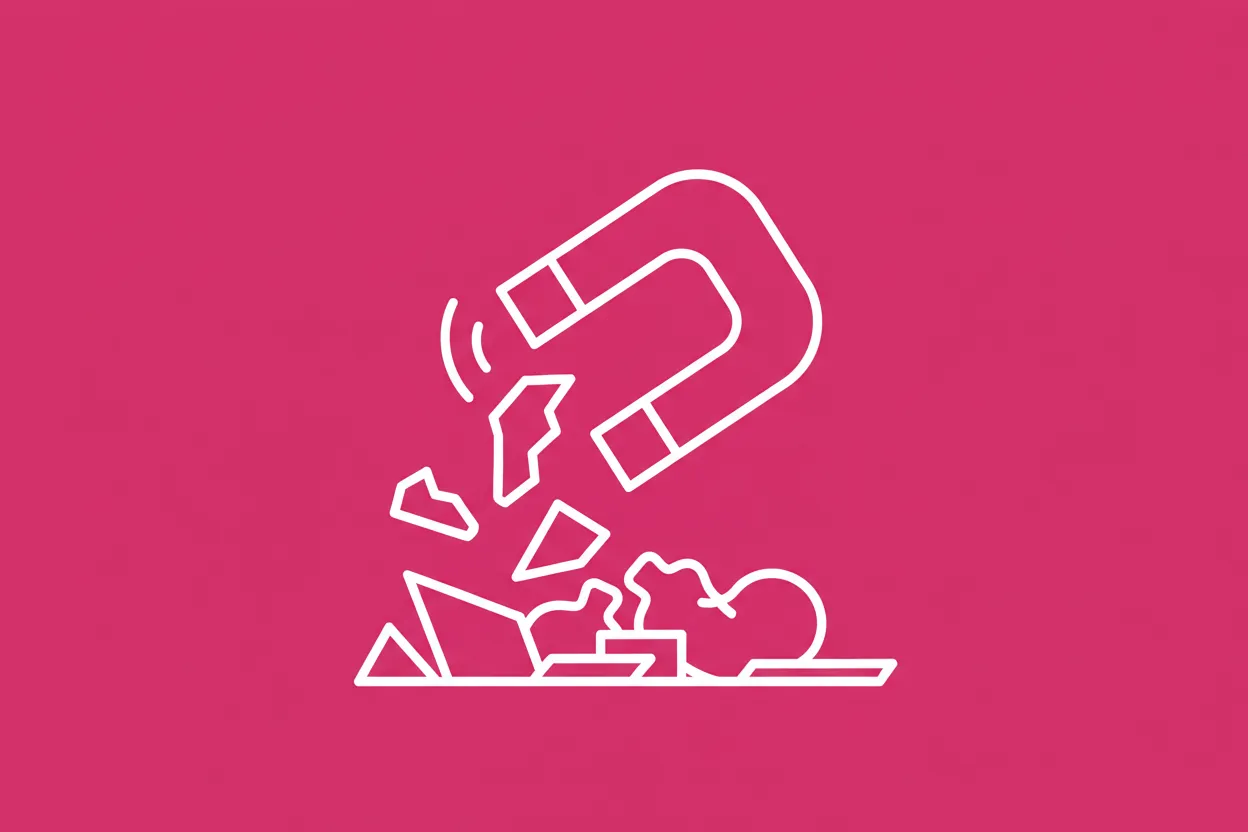
Think of a fast-spinning magnet like a magic wand that gently pushes certain metals away, sorting them from a pile of mixed trash. It’s a bit like how a strong gust of wind separates leaves from heavier stones.
Just like how a breeze can send light leaves flying while heavier objects stay put, spinning magnets create electric currents in metals that push them apart from plastics and glass. This clever process, called eddy current separation, helps recycle metals quickly and carefully.
Definition: Eddy current separation
Eddy current separation (ECS) is a process that uses spinning magnets inside a drum to create electric currents in non-ferrous metals, like aluminum. These currents push the metal pieces away from other waste, sorting them without damage. ECS helps recycle metals efficiently from mixed trash.
Eddy current separation uses spinning magnets to create electric currents in metals. These currents push metals away to separate them from other waste.
Think about recycling aluminum cans mixed with plastic bottles. When they go through an eddy current separator, the machine quickly pushes the cans one way and the plastics another, making recycling faster and cleaner.
Clearing up common myths about eddy current separation
Have you ever wondered if eddy current separation only works for big metal scraps? It’s easy to think ECS is limited to large pieces, but it can actually separate tiny metal bits too. Adjusting its sensitivity helps target metals of different sizes, making it quite flexible.
Some believe ECS treats all non-ferrous metals the same, but that’s not quite true. The system’s success depends on the metal’s electrical properties, which means certain metals are easier to separate than others. Recycling centers often tweak ECS settings to get the best results for each metal type.
Another idea is that ECS works alone as a magic fix for metal sorting. In reality, it performs best when teamed up with other methods like magnets or air classifiers. This teamwork boosts recovery rates and supports a more circular recycling process.
Eddy current separation isn’t brand new—it’s been around for decades. Its proven track record in industries like electronics and automotive recycling shows how valuable it is for sustainable resource management. Using ECS smartly helps close the loop and reduce waste.
5 examples on how non-ferrous metals are sorted in recycling
Here are some practical examples showing how non-ferrous metals get separated efficiently using advanced technology:
- Aluminum cans: These are commonly separated from other waste using non-ferrous metal detection. This process helps recover valuable aluminum for recycling without contamination.
- Copper wires: Copper is identified and extracted due to its distinctive electrical properties, making it a prime candidate for metal recovery in mixed waste.
- Brass components: Found in plumbing and fixtures, brass is separated to ensure precious metal recycling and reduce landfill waste.
- Stainless steel scraps: Although mostly ferrous, some stainless steel parts contain non-ferrous elements that are sorted out to maximize resource efficiency.
- Lightweight car parts: Non-ferrous parts like aluminum and magnesium alloys in vehicles are sorted for automotive recycling programs to support circular economy goals.
While these examples highlight the benefits of sorting non-ferrous metals, many recycling systems still struggle with mixed materials that reduce purity and value. This contrast shows why improving sorting technologies is key to higher recycling rates and better sustainability outcomes.
Terms related to eddy current separation
Non-ferrous metals are valuable in recycling due to their ability to be separated without contamination. Here are key terms connected to this process:
- Magnetic field: The invisible force used to attract or repel metals during sorting.
- Non-ferrous metals: Metals like aluminum and copper that don’t contain iron and are recyclable.
- Material recovery facility (MRF): A center where recyclables are sorted and processed.
- Waste stream: The flow of waste materials moving through collection and recycling systems.
- Circular economy: A system that keeps materials in use for as long as possible to reduce waste.
- Resource efficiency: Using materials wisely to minimize waste and environmental impact.
- Sorting efficiency: How well a system separates different materials for recycling.
- Industrial waste management: Handling and processing waste generated from factories sustainably.
- Sustainable manufacturing: Producing goods in ways that reduce environmental harm.
- Metal recovery: The process of extracting metals from waste to be reused.
Frequently asked questions on eddy current separation
Eddy current separation is a key technology for sorting and recycling metals efficiently.
What is eddy current separation used for?
Eddy current separation is mainly used to separate non-ferrous metals like aluminum and copper from mixed waste streams, helping recover valuable materials for recycling.
How does eddy current separation support recycling technology?
It enables fast and effective sorting of metals without manual labor, improving recycling rates and reducing the need for mining new raw materials.
Why is eddy current separation important for circular economy?
By recovering metals from waste, it keeps materials in use longer, reducing landfill and conserving natural resources, which is essential for a circular economy.
How does eddy current separation improve resource efficiency?
It maximizes the amount of metal recovered from waste, minimizing losses and making industrial processes more sustainable and cost-effective.
Can eddy current separation handle industrial waste management?
Yes, it is widely used in industrial waste facilities to sort metals from mixed waste, ensuring proper recycling and reducing environmental impact.
What metals can eddy current separation recover?
Primarily non-ferrous metals like aluminum, copper, brass, and stainless steel, which are valuable for recycling and often mixed within waste materials.
