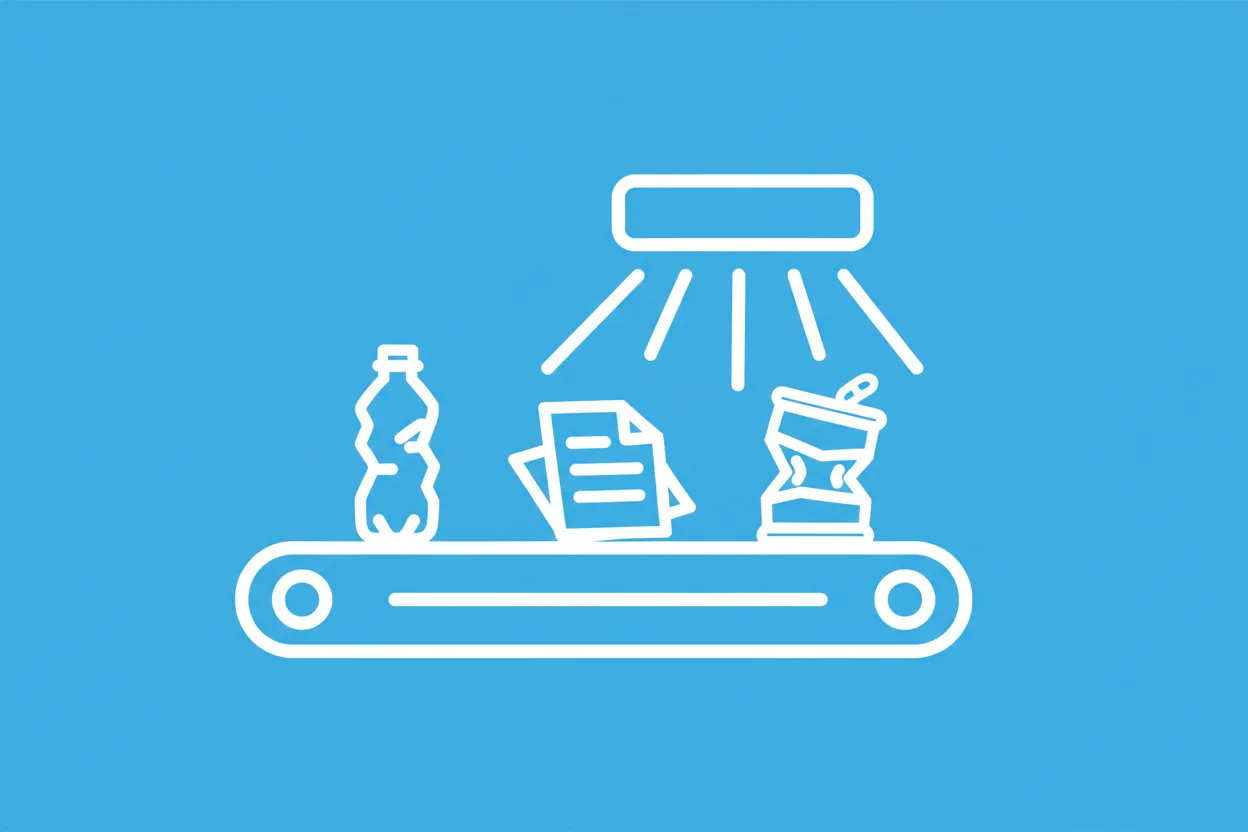
Near-Infrared (NIR) Sorting is a smart recycling technology that shines invisible light on materials to tell them apart quickly and accurately. It helps separate plastics, paper, and metals by reading how each one reflects this special light.
This technology speeds up recycling by sorting thousands of items per minute, reducing mistakes people might make by hand. It supports a cleaner, more circular system by keeping valuable materials in use and cutting down waste and energy use.
Definition: near-infrared (NIR) sorting
NIR sorting is a technology that uses near-infrared light to identify and separate materials like plastics, paper, and metals in recycling. It works by shining invisible light on items, reading how each material reflects it, and then sorting them quickly and accurately on a conveyor belt.
NIR sorting reads how materials reflect near-infrared light. It uses this to quickly and accurately separate plastics, paper, and metals in recycling.
Think of a recycling plant where mixed plastic bottles, paper, and cans move on a conveyor. The NIR sensor scans each item’s unique light reflection, telling machines exactly where to send them—making recycling faster and cleaner without humans having to guess.
Clearing up myths about near-infrared sorting in recycling
Have you heard that near-infrared (NIR) sorting can detect every type of plastic? Many people assume this, but black plastics often escape detection because they absorb NIR light, making sorting less effective. This means some materials still slip through the recycling process.
NIR sorting is powerful but not perfect. Dirt, moisture, and additives in plastics can confuse sensors and reduce accuracy. It also struggles to tell apart similar polymers or handle black plastics alone. That’s why regular maintenance and combining NIR with other technologies improve sorting results and increase material recovery.
Is NIR sorting only useful for plastics? Not at all. This technology can also help separate textiles and metals, broadening its role in circular waste management. Using NIR beyond plastics supports more comprehensive recycling efforts.
NIR sorting isn’t a magic fix but a key tool in the recycling toolkit. Recognizing its limits helps producers and recyclers work smarter toward a more sustainable circular economy.
4 examples on how technology improves waste sorting
Technology helps make waste sorting faster and more accurate, which supports better recycling and circularity. Here are some ways advanced sorting tools play a role:
- Plastic identification: Machines use light to recognize different types of plastics, improving the separation of recyclable materials. This reduces contamination in recycling streams.
- Material purity: Sorting technology ensures that materials like paper, metals, and plastics are separated precisely, increasing the quality of recycled products.
- Automated sorting lines: Factories use sensors and robotics to sort waste automatically, cutting down manual labor while boosting efficiency.
- Contaminant removal: Advanced sorting detects and removes unwanted materials, helping recyclers produce cleaner, more valuable outputs.
While human effort in sorting waste remains important, technology adds speed and precision that manual sorting can’t match. This combination is key for a more circular and sustainable waste system.
Terms related to optical sorting in waste management
Many recycling facilities use advanced light technology to quickly separate materials for better recycling outcomes.
- Hyperspectral Imaging: Captures detailed light data across many wavelengths to identify materials precisely.
- Fluorescence Spectroscopy: Detects specific materials by measuring the light they emit when exposed to certain wavelengths.
- Automated Sorting: Machines that use sensors and software to separate waste without manual handling.
- Sensor Fusion: Combines data from multiple sensors to improve accuracy in identifying materials.
- Material Recognition: Technology that helps identify different types of plastics and other recyclables.
- Resource Recovery: Processes designed to extract valuable materials from waste streams efficiently.
- Plastic Identification: Techniques used to classify plastic types for proper recycling pathways.
Frequently asked questions on near-infrared (NIR) sorting
Near-infrared sorting is a powerful tool in modern recycling that helps separate materials quickly and accurately.
How does near-infrared sorting fit into optical sorting technologies?
NIR sorting is a type of optical sorting that uses light beyond visible wavelengths to identify materials by their unique spectral signatures. This allows machines to detect different plastics or fibers for precise separation.
Why is NIR sorting important for waste sorting and recycling?
NIR sorting speeds up the sorting process and improves material purity, which boosts recycling efficiency. Cleaner material streams mean better-quality recycled products and less contamination.
How does near-infrared sorting help with material identification?
NIR sensors detect the way materials reflect or absorb infrared light. Each type of plastic or fiber has a distinct pattern, letting the system identify and sort them accurately without manual inspection.
What role does spectroscopy play in recycling with NIR?
Spectroscopy measures light interaction with materials. NIR spectroscopy is used in sorting to analyze materials quickly on conveyor belts, enabling real-time identification for recycling plants.
Can near-infrared sorting be part of automated sorting systems?
Yes! NIR sorting is a key technology in automated sorting systems, allowing machines to separate materials without human intervention, making recycling faster and more cost-effective.
How does NIR sorting support circular economy processes?
By enabling efficient separation and recovery of materials, NIR sorting helps keep resources in use longer, reducing waste and promoting recycling, which are central goals of the circular economy.
What benefits does NIR sorting offer for plastic waste management?
NIR sorting improves the sorting of different plastic types, making recycling more effective. This reduces landfill waste and helps create high-quality recycled plastics for new products.
