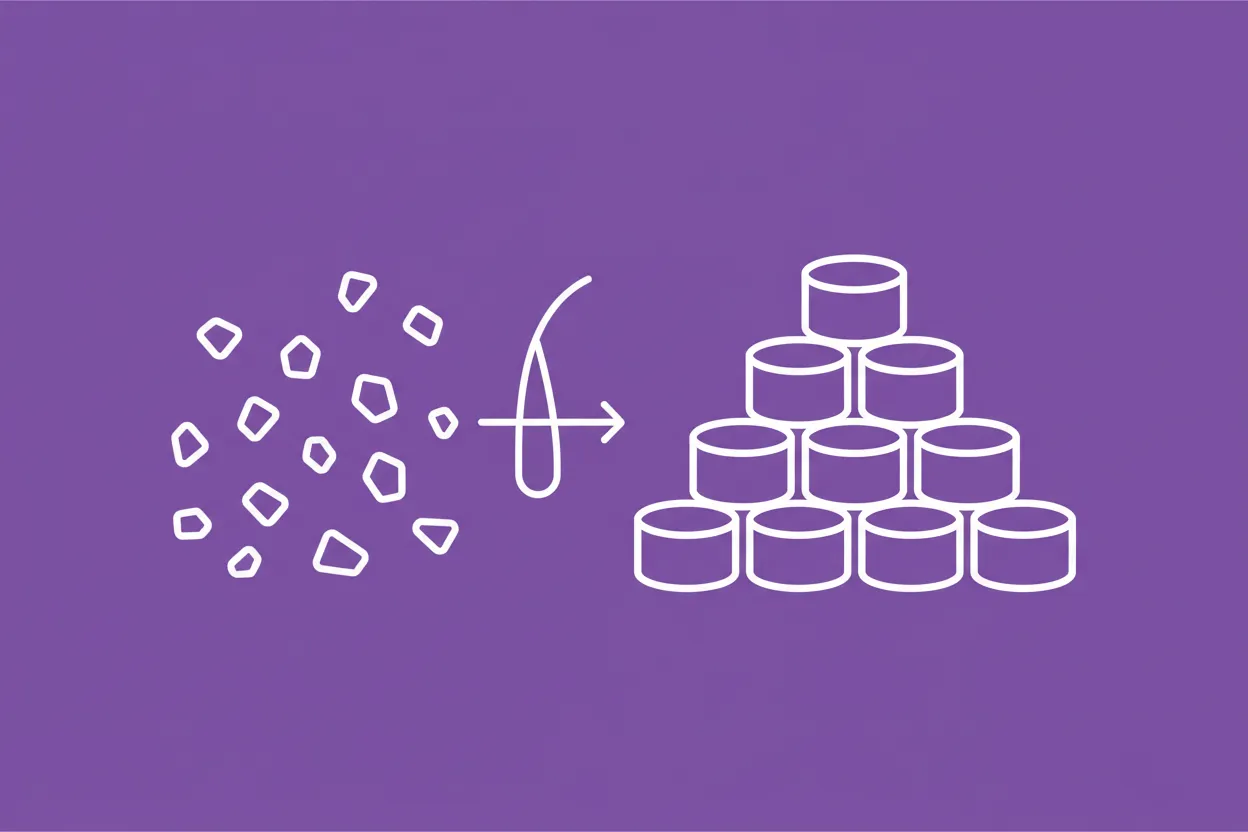
Small particles of waste or raw materials can be turned into solid, uniform pellets through a process that helps manage resources better. This method makes handling, transporting, and using materials simpler and more efficient. In recycling and sustainability, pelletisation plays a big role in reducing waste and supporting circular economy goals.
By compressing materials like wood chips, plastic scraps, or agricultural leftovers into pellets, industries cut down on space and dust while improving storage and transport. This saves energy and lowers emissions, which is great news for the environment.
Pelletisation also helps produce cleaner fuels and reusable raw materials, turning waste into valuable products. It’s a practical step toward a circular system where resources keep flowing instead of ending up in landfills. Have you noticed how pellets make bulky materials neat and easy to handle? That’s the power of pelletisation.
Definition: pelletisation
Pelletisation is the process of compressing small particles into larger, solid pellets. It makes materials easier to handle, transport, and use by forming uniform, compact shapes. This method is common in recycling, waste management, and producing biofuels to improve efficiency and sustainability.
Pelletisation makes materials easier to handle by forming uniform, compact shapes. It compresses small particles into larger, solid pellets.
For example, turning loose wood chips into small pellets makes them easier to store and burn efficiently as biofuel. This reduces waste, cuts transport costs, and supports cleaner energy choices by changing loose materials into neat, manageable pellets.
Tracing the journey of iron ore pellet making
How did iron ore processing improve to meet growing steel demands? Early societies struggled with raw ore lumps that wasted fuel and lowered quality. Over time, new methods like pelletisation transformed how iron fines are handled and boosted production efficiency.
Centuries back, simple smelting was common, but the Industrial Revolution pushed the need for better ore preparation. Sintering came next, heating ore fines into a usable form but with environmental drawbacks. Pelletisation then emerged, rolling fine particles into uniform balls that burn cleaner and work better in furnaces.
Today’s pelletisation uses advanced tech to save energy and cut emissions. Innovations like compact pelletizing plants help producers adjust quality while reducing space and waste. This progress shows commitment to sustainable steelmaking that balances output with environmental care.
Pelletisation has evolved to support circular economy goals by turning waste fines into valuable products. Each step in its history brings us closer to greener, more responsible iron and steel production.
4 examples on turning waste into reusable materials
Here are some ways waste materials are transformed into new useful forms through a process that compacts and reshapes them:
- Plastic waste pellets: Small, dense beads made from melted and cooled plastic scraps. These pellets are easier to transport and recycle into new products.
- Biomass fuel pellets: Compressed organic material like wood chips or agricultural residues. They burn efficiently as renewable energy sources.
- Metal powder pellets: Finely ground metal waste compressed into pellets for easier melting and reuse in manufacturing. This reduces mining demand.
- Food waste pellets: Dehydrated and compacted food scraps turned into animal feed or fertilizer. This helps close the nutrient loop and reduce landfill.
While pelletizing waste creates handy, uniform materials for recycling, some waste types are better suited for other reuse methods like direct reuse or chemical recycling. Not every material benefits equally from this approach.
Terms related to pellet production
Pellets are widely used in various industries to improve material handling and energy efficiency.
- Biomass pellets – Compressed organic materials like wood or agricultural waste used as renewable energy sources.
- Iron ore pellets – Small balls of iron ore used in steelmaking for better furnace performance.
- Pellet mill technology – Machines that compress raw materials into pellet form through pressure and heat.
- Feed pellets – Nutrient-rich pellets designed for livestock or fish to improve feeding efficiency.
- Waste pellets – Processed waste materials turned into pellets to reduce landfill and support recycling.
- Pellet binders – Substances added to raw materials to help pellets hold their shape and improve durability.
- Thermal processing – Heat treatment applied to pellets to enhance strength, moisture resistance, or combustion.
- Quality control – Testing methods to ensure pellets meet size, density, and durability standards.
- Storage and handling – Proper techniques to store pellets safely and maintain their quality before use.
Frequently asked questions on pelletisation
Pelletisation is a process used in various industries to create small, uniform pellets from raw materials for easier handling, transport, and use.
What is biomass pelletisation?
Biomass pelletisation turns organic materials like wood or crop waste into compact pellets. These pellets serve as a renewable fuel, making energy use cleaner and reducing waste.
How does iron ore pelletisation work?
Iron ore pelletisation shapes fine iron ore into balls or pellets. This improves the ore’s strength and makes it easier to use in steel production, reducing dust and improving efficiency.
What technology is used in pellet mills?
Pellet mills use rollers and dies to compress raw material into pellets. The technology ensures uniform size and density, which helps in effective burning or feeding.
Why is pellet quality control important?
Quality control checks pellet size, moisture, and durability. Good quality pellets burn better, last longer in storage, and reduce waste during handling.
What role do pellet binder materials play?
Binders help raw materials stick together during pelletisation. They improve pellet strength and reduce dust, making pellets more durable and easier to transport.
How should pellets be stored and handled?
Pellets should be kept dry and protected from moisture to prevent breaking down. Proper storage extends shelf life and keeps pellets ready for use without loss.
