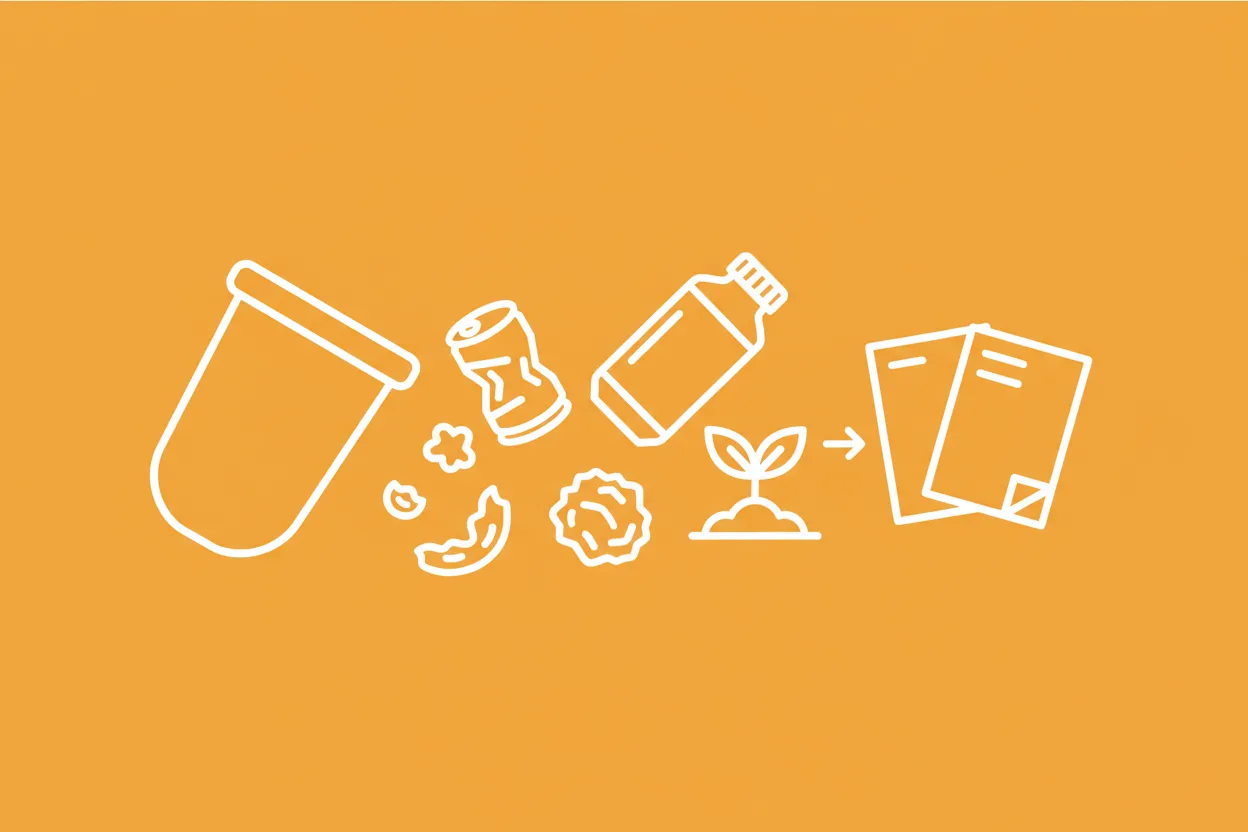
Finding ways to keep trash out of landfills and incinerators helps protect our environment and saves valuable resources. Waste diversion focuses on sorting, reusing, recycling, and composting materials instead of simply throwing them away. This approach turns what we often call "waste" into useful resources again, supporting a healthier planet and a stronger economy.
Definition: waste diversion
Waste diversion means reducing the amount of trash sent to landfills or incinerators by sorting, recycling, composting, and reusing materials. It keeps items like paper, plastic, and food scraps out of the trash so they can be made useful again.
Waste diversion keeps items out of the trash so they can be used again. It means sorting, recycling, composting, and reusing materials instead of sending them to landfills.
For example, instead of throwing away food scraps, you might compost them to create nutrient-rich soil. Or, you could recycle plastic bottles to make new containers, helping reduce the need for raw resources and lowering pollution.
The journey of reducing landfill waste across Europe
How did Europe move from throwing most waste into landfills to recycling and composting more? Early challenges with overflowing landfills pushed countries to find better ways to handle trash. This shift reflects growing care for the environment and smarter resource use.
In the mid-1900s, landfills were the go-to solution, but pollution concerns soon sparked change. The Waste Framework Directive of 1975 set the stage for a recycling-focused society. Over decades, updated laws and programs like Pay As You Throw encouraged less waste and more recycling, showing how policy drives progress.
Some regions led the way by setting bold goals. For example, Flanders in Belgium reached a 73% waste diversion rate by 1991 through strong incentives. These successes proved that combining rules with community effort can make a big impact on reducing landfill reliance.
Today, cities and countries continue improving waste diversion, showing it’s possible to protect the planet while managing waste. This evolving journey highlights the power of commitment, innovation, and teamwork in building a circular economy.
3 examples on keeping materials out of landfills
Here are practical ways communities and businesses prevent waste from piling up:
- Composting programs: These initiatives turn food scraps and yard waste into nutrient-rich soil. By diverting organic waste, they reduce landfill methane emissions and support local gardens.
- Electronic recycling: Collecting and processing old gadgets ensures valuable metals and plastics are recovered. This keeps hazardous substances out of the environment and conserves resources.
- Textile reuse: Donation centers and resale shops extend the life of clothing. This approach cuts down on textile waste and lessens the need for new fabric production.
While some methods require large-scale coordination, others can be adopted easily at home. Both play key roles in managing materials responsibly.
Terms related to waste management strategies
More than one-third of global waste is estimated to be mismanaged, highlighting the need for effective waste handling approaches.
| Term | Description |
|---|---|
| Recycling | Process of converting waste materials into new products to conserve resources and reduce pollution. |
| Composting | Natural breakdown of organic waste into nutrient-rich soil, supporting plant growth. |
| Waste Reduction | Efforts to minimize the amount of waste generated through mindful consumption and production. |
| Circular Economy | An economic system focused on reusing, repairing, and recycling to keep materials in use longer. |
| Resource Recovery | Extracting valuable materials or energy from waste instead of disposal. |
| Landfill Diversion | Strategies to redirect waste away from landfills toward reuse, recycling, or recovery. |
| Sustainable Waste Management | Managing waste in a way that protects the environment and conserves resources for future generations. |
| Extended Producer Responsibility (EPR) | Policies requiring manufacturers to take responsibility for the end-of-life management of their products. |
Frequently asked questions on waste diversion
Waste diversion helps keep materials out of landfills by reusing, recycling, or composting them.
What is recycling and why is it important?
Recycling turns old materials like paper, plastic, and metal into new products. It saves energy, reduces pollution, and conserves natural resources, helping to keep waste out of landfills.
How does composting contribute to waste diversion?
Composting breaks down food scraps and yard waste into nutrient-rich soil. This process reduces landfill waste and cuts greenhouse gas emissions while creating something useful for gardens.
What role does extended producer responsibility (EPR) play in waste management?
EPR makes manufacturers responsible for the entire life of their products, including disposal. This encourages companies to design products that are easier to recycle and reduces waste.
What is a circular economy and how does it relate to waste diversion?
A circular economy keeps products and materials in use for as long as possible by recycling, repairing, and reusing. It helps reduce waste and supports sustainable resource management.
How can waste reduction impact landfill diversion?
Waste reduction means using fewer materials and creating less trash. By cutting down on what we throw away, we send less to landfills and help protect the environment.
