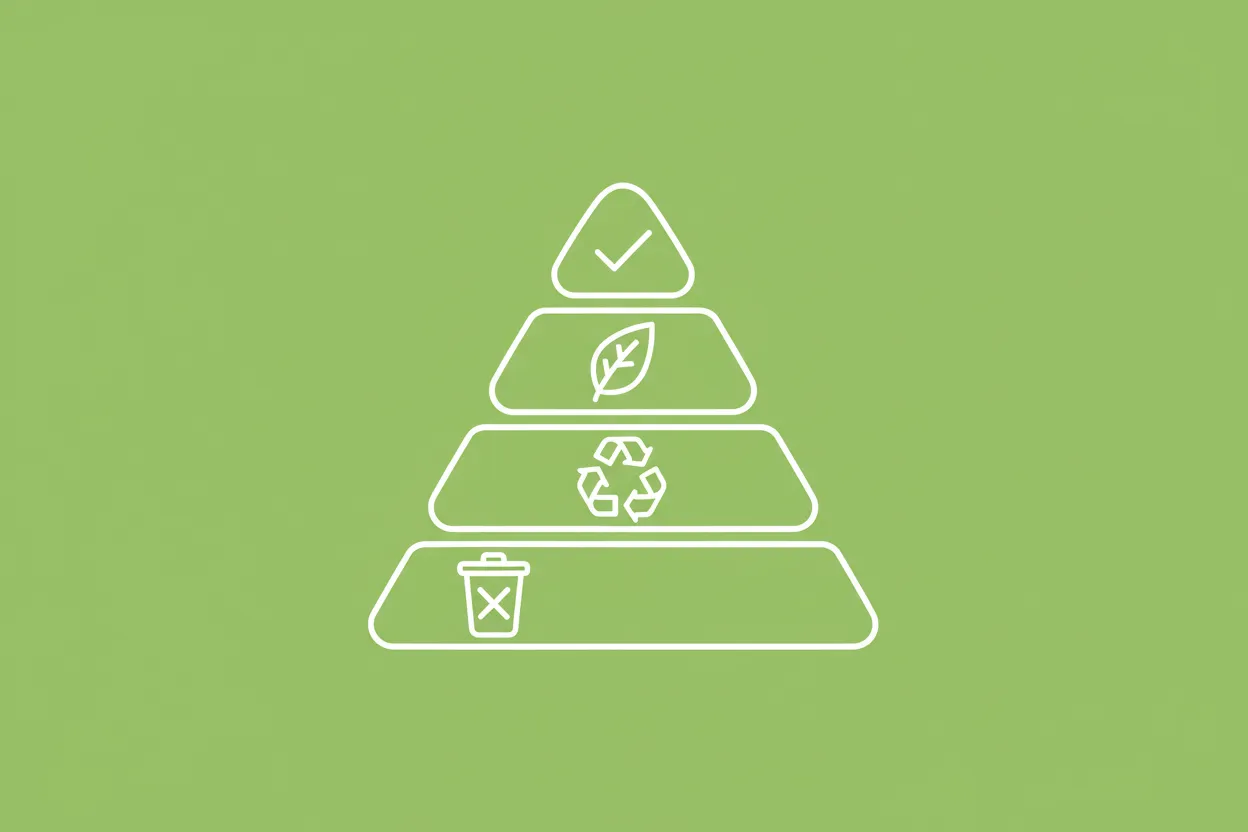
Think of Waste Hierarchy Calculation like a report card for how we handle trash, showing what’s done best to protect our planet and what needs fixing. It ranks ways to manage waste, from stopping it before it starts to simply throwing it away, helping us see where we can do better.
Handling waste is a bit like sorting laundry: you want to keep your favorite clothes in good shape, reuse the still-wearable ones, and only toss what’s truly worn out. Waste Hierarchy Calculation scores these choices, guiding us to treat materials with care and keep them in use longer.
Just like choosing smarter laundry habits saves money and wear on clothes, using this calculation helps communities and businesses reduce waste, save resources, and protect the environment by following the best steps in the waste hierarchy.
Definition: waste hierarchy calculation
Waste Hierarchy Calculation measures how well waste is managed by ranking methods from best to worst: prevention, reuse, recycling, recovery, and disposal. It uses data on waste amounts and environmental impact to score waste handling, helping identify where to improve for greener, more circular waste systems.
Waste Hierarchy Calculation uses data on waste amounts and environmental impact to score waste handling. It measures how well waste is managed by ranking methods from best to worst.
For example, a city might track how much waste is prevented, reused, or recycled and assign scores based on the hierarchy. If most waste ends up in landfills, the calculation shows a low score, highlighting the need to increase reuse or recycling efforts to protect the environment.
How the waste hierarchy shaped sustainable waste management
What sparked the idea behind the waste hierarchy? It began as a way to guide better waste handling, focusing on methods that lessen environmental harm. This framework helps prioritize actions from avoiding waste to its disposal.
Back in 1975, the European Union introduced a directive that laid the foundation for this approach. Over time, updates refined the hierarchy into five steps, such as prevention, reuse, and recycling, emphasizing smarter resource use. These stages work together to reduce waste’s environmental impact and support a circular economy.
Why does this matter today? The waste hierarchy influences policies that promote sustainability and proper resource management across Europe. It encourages everyone to think beyond just throwing things away.
The waste hierarchy remains a key tool for reducing waste and boosting recycling, guiding us toward a cleaner, more circular future.
7 examples on prioritizing waste management steps
Here are some practical examples showing how different actions fit into managing waste effectively:
- Prevention: Designing products with fewer materials to reduce waste generation. This step focuses on avoiding waste before it even exists.
- Reuse: Using glass jars multiple times instead of discarding them after a single use. This helps extend the life of materials.
- Recycling: Collecting plastic bottles and turning them into new containers. Recycling recovers valuable materials to be used again.
- Recovery: Converting organic waste into compost for soil enrichment. This process recovers energy or nutrients from waste.
- Energy recovery: Burning non-recyclable waste to produce heat or electricity. This reduces landfill volume but is less preferred than reuse or recycling.
- Disposal: Sending waste to landfill as a last resort. Disposal is the least sustainable option and should be minimized.
- Extended producer responsibility: Producers take back used products for proper treatment. This encourages designing for easier reuse and recycling.
Focusing too much on disposal misses the chance to save resources and reduce pollution. By shifting efforts toward prevention and reuse, communities can create a healthier, more circular system.
Terms related to managing waste and resources efficiently
Reducing waste and using materials wisely helps protect the environment and supports a circular economy where resources keep flowing.
- Extended Producer Responsibility (EPR): A policy approach where producers take responsibility for the entire lifecycle of their products, including disposal and recycling.
- Circular Economy: An economic system focused on reusing, repairing, and recycling materials to keep them in use longer.
- Resource Efficiency: Using materials and energy in a way that reduces waste and environmental impact while maximizing value.
- Life Cycle Assessment (LCA): A method to evaluate the environmental effects of a product from creation to disposal.
- Sustainable Production: Manufacturing goods in ways that minimize harm to the environment and conserve resources.
- Environmental Impact Assessment (EIA): A process that predicts how a project might affect the environment before it begins.
- Material Recovery: The process of extracting useful materials from waste for reuse or recycling.
- Recycling Processes: Techniques used to convert waste materials into reusable raw materials.
- Waste Minimization: Strategies to reduce the amount and toxicity of waste generated.
- Composting: A natural process that turns organic waste into nutrient-rich soil, reducing landfill use.
Frequently asked questions on waste hierarchy calculation
Here are some common questions to help you learn more about waste hierarchy and how it supports sustainability.
What is waste hierarchy calculation?
Waste hierarchy calculation ranks waste management options by their environmental impact. It helps prioritize reducing, reusing, recycling, and recovering materials before disposal, encouraging better resource use and less pollution.
How does waste hierarchy support circular economy?
Waste hierarchy promotes circular economy by emphasizing waste prevention and material recovery. It encourages keeping resources in use longer, reducing the need for new raw materials and minimizing landfill waste.
Why is material recovery important in waste hierarchy?
Material recovery extracts valuable materials from waste to be reused or recycled. This reduces the demand for virgin resources, saves energy, and lowers environmental impacts, making waste management more sustainable.
What role does recycling play in waste hierarchy?
Recycling converts waste into new products, diverting materials from landfills. It's a key step in the hierarchy that helps conserve resources, reduce pollution, and supports circular economy goals.
How does waste hierarchy help waste minimization?
By prioritizing actions like reducing and reusing before disposal, waste hierarchy encourages waste minimization. This leads to less waste generation, saving resources, and lowering environmental harm.
Can waste hierarchy calculation include life cycle assessment?
Yes, life cycle assessment (LCA) can be part of waste hierarchy calculation. LCA evaluates the environmental impact of waste treatment options from start to finish, helping choose the most sustainable solution.
