Frederik Kiel Jespersen
Frederik Kiel is Co-Founder and Chief Technology Officer at Repax, where he architects technology solutions that bridge the gap between regulatory compliance and sustainable business practices. He focuses on building scalable infrastructure that transforms complex environmental responsibilities into actionable insights. With a commitment to better technology as a force for environmental stewardship, Frederik works at the intersection of compliance innovation and circular economy advancement.
Articles by :author:
The latest industry news, interviews, technologies, and resources.
What are small household appliances (WEEE)?
Glossary
Small household appliances must carry a crossed-out bin symbol under the EU WEEE Directive, ensuring they’re recycled properly to recover materials and prevent environmental harm.
What are WEEE categories?
Glossary
WEEE categories group electronic waste like appliances, IT gear, lighting, tools, toys, medical devices, and vending machines. Sorting helps recycle materials safely, supporting a circular economy.
What is black mass in battery recycling?
Glossary
Black mass is a powder from recycled batteries, rich in metals like lithium and cobalt. Recycling it saves resources, cuts pollution, and supports a circular economy for new batteries.
What is the WEEE recast?
Glossary
The WEEE Recast boosts e-waste recycling by making producers responsible, raising targets, improving product design, and ensuring safe handling to protect the environment and save resources.
What are large household appliances (WEEE)?
Glossary
Large Household Appliances (WEEE) need proper recycling to recover valuable materials, prevent pollution, and support a circular economy. Returning old appliances helps protect the environment and save resources.
What is a battery compliance scheme?
Glossary
A Battery Compliance Scheme helps collect and recycle batteries safely, keeping harmful chemicals out of nature and turning waste into valuable materials, supporting a cleaner planet.
What is energy density in batteries?
Glossary
Energy density shows how much energy a battery stores by weight or size. Higher energy density means longer use, lighter batteries, less waste, and better sustainability for devices and electric vehicles.
What is battery capacity (kWh)?
Glossary
Battery capacity (kWh) shows how much energy a battery holds, like a tank size. Bigger capacity means longer use, supports renewable energy, and helps reduce waste by enabling reuse and recycling.
What is pyrometallurgical recycling of batteries?
Glossary
Pyrometallurgical recycling melts batteries to recover metals like cobalt and nickel. It handles mixed batteries well but uses much energy and loses some materials, aiding circular economy and waste reduction.
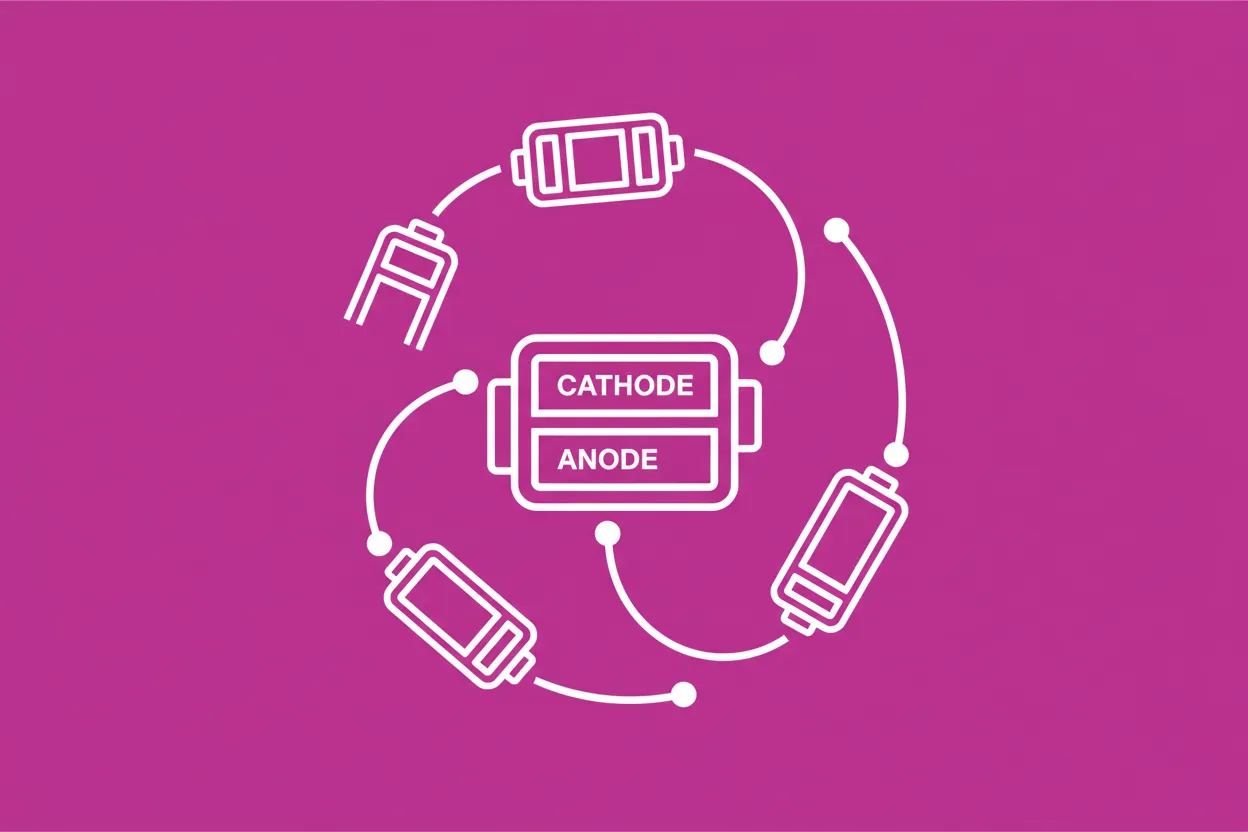
What is direct recycling of batteries?
Glossary
Direct recycling reuses battery materials intact, saving energy and resources. It cuts pollution, reduces mining, supports circular economy, and lowers costs for sustainable battery production.
What is hydrometallurgical recycling of batteries?
Glossary
Hydrometallurgical recycling recovers metals from old batteries using water-based chemicals, saving energy, reducing pollution, and supporting circular economy by reusing valuable materials sustainably.
What is a nickel-metal hydride battery?
Glossary
NiMH batteries last long, are safer, and recycle well, cutting waste and pollution. They’re a smart, eco-friendly choice for gadgets and electric cars, supporting a cleaner, circular economy.